
Participate in our Gastroesophageal Junction Adenocarcinoma clinical trials and contribute to a pioneering research study for GEJ cancer.
Gastroesophageal Junction Adenocarcinoma Clinical Trials
Emerging Future Treatment Options for Gastroesophageal Junction Adenocarcinoma through Clinical Trials in Nebraska
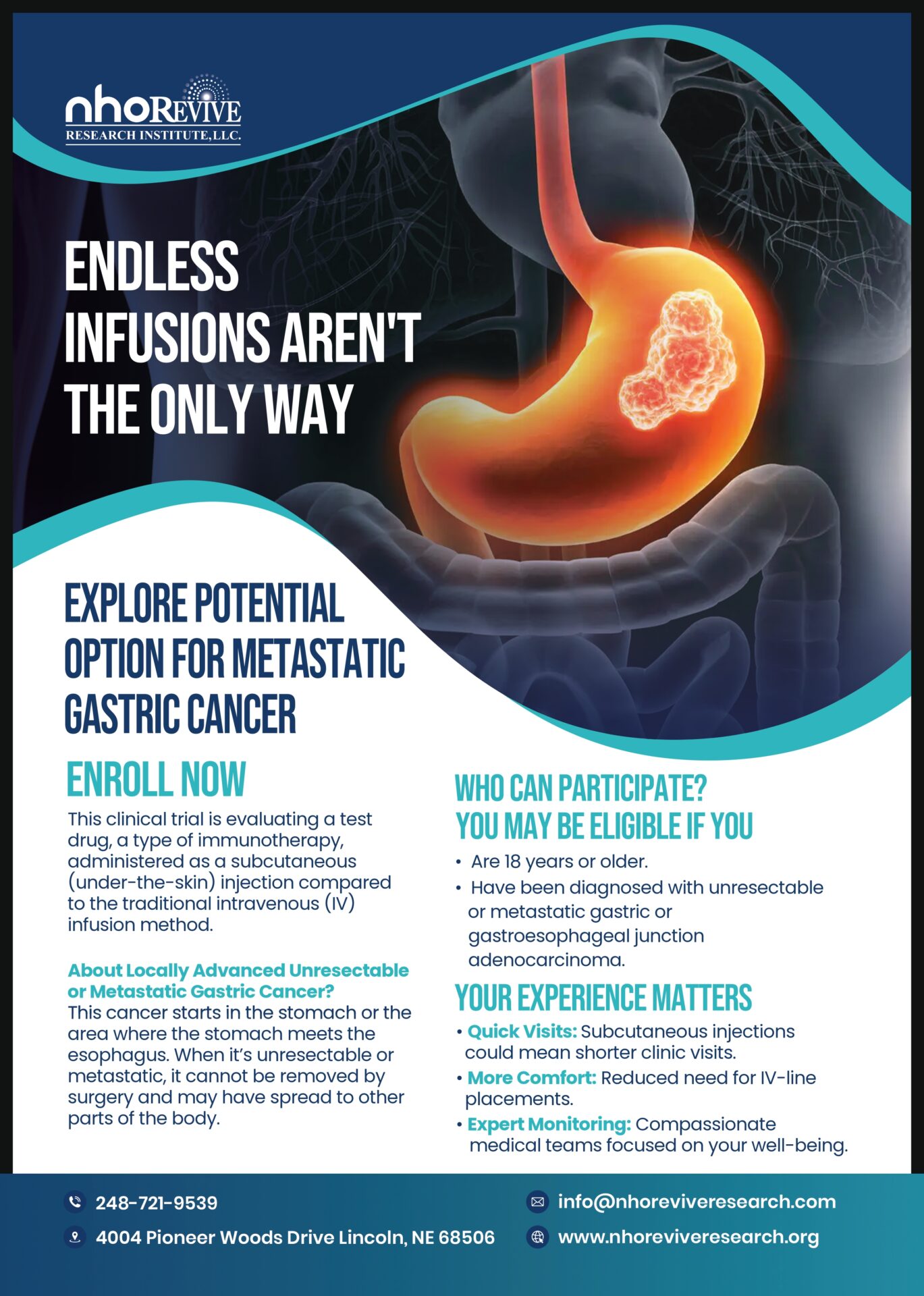
Gastroesophageal Junction (GEJ) adenocarcinoma occurs where the esophagus meets the stomach, developing as abnormal cells grow in this critical pathway for swallowing and digestion. Symptoms may include difficulty eating, persistent heartburn, chest discomfort, unintentional weight loss, or ongoing fatigue—changes that can affect daily routines and overall well-being. NHO Revive Clinical Research is conducting a clinical trial exploring an investigational therapy to evaluate whether it may offer benefits beyond existing treatment approaches for individuals diagnosed with GEJ cancer.
By joining this study, you contribute to vital research that may help advance future methods for earlier detection, improved therapeutic strategies, and enhanced supportive care for those facing GEJ adenocarcinoma.
Eligibility Criteria for Gastroesophageal Junction Adenocarcinoma Research Studies
- Age: 18 years or older
- Gender: Both Male & Female
- Confirmed diagnosis of locally advanced unresectable or metastatic GEJ adenocarcinoma
- Has received no other prior systemic therapy
*Participation in our clinical study is voluntary, and it’s important to consult with your healthcare provider before making any decisions related to your treatment or care.
*Participation in the clinical trials causes no expenses for you or your private medical insurance. You’ll receive compensation for your time and travel.
Status - Recruiting
About Symptoms of Gastroesophageal Junction Adenocarcinoma and More
Gastroesophageal Junction (GEJ) adenocarcinoma can develop gradually, and early stages may go unnoticed. It often overlaps with other conditions. As the disease progresses, individuals may experience persistent heartburn, difficulty swallowing, chest or upper abdominal discomfort, Hoarse voice, fatigue, or a feeling of food sticking after meals. These symptoms can interfere with daily life and signal the need for timely evaluation. Understanding the complexities of GEJ cancer is crucial for choosing appropriate treatment options and managing the condition effectively.
Detecting GEJ adenocarcinoma early can help improve treatment success and overall health outcomes. Participating in Gastroesophageal Junction Adenocarcinoma Research Studies contributes to the development of potential new therapies and diagnostic advancements that may offer meaningful benefits for individuals today and in the future.
Get Started
What to Expect
If you volunteer for NHO Revive clinical trial by completing the form above, our study team will reach out to assess your eligibility for this breast cancer clinical trial. They’ll review the study specifics with you to check if you meet the criteria for participation. If you qualify, you’ll be invited to the study site for screening, located within a 50-mile radius of where you are now.
The doctors will discuss the trial’s duration and its impact on your cancer treatment. Once everything is explained, participants will be asked to sign an informed consent form. Make sure to go through everything with your provider. We value transparency between our participants and investigators.
*You’ll receive study-related care at no cost, including comprehensive physical exams and evaluations conducted by skilled clinicians.
Age
18 years and older
Gender
Both Male & Female
Location
New Bedford, MA


300
Certificated Physicians in +20 States.
About Disease
Risk Factors for Individuals with Gastroesophageal Junction Adenocarcinoma
Although the exact cause is not fully understood, research suggests several factors may increase a person’s risk of developing GEJ cancer. These include chronic gastroesophageal reflux disease (GERD), Barrett’s esophagus, smoking, obesity, frequent alcohol consumption, diets high in processed or acidic foods, genetic predispositions, and family history. Recognizing these risk factors can encourage timely evaluation and support informed conversations with healthcare providers about prevention and early detection.
Frequently Asked Questions
Interested in learning more about our research? Explore our frequently asked questions to gain knowledge about this condition.
What are Clinical Trials for Gastroesophageal Junction Adenocarcinoma?
Clinical trials are research studies designed to evaluate new investigational treatments, diagnostic tools, or supportive care strategies for GEJ cancer. These studies help determine whether emerging therapies offer improved effectiveness, safety, or comfort compared to current standard care.
Who can participate in GEJ Adenocarcinoma Investigational Treatment?
GEJ adenocarcinoma research study is open to adults diagnosed with Gastroesophageal Junction adenocarcinoma. A screening process is conducted by the research team to determine whether a participant meets specific study criteria.
How long does a GEJ Adenocarcinoma clinical trial last?
The duration varies depending on the study design. Some trials run for several months, while others may continue for a year or longer. The research team will provide a clear timeline, including treatment cycles, follow-up visits, and any long-term monitoring requirements.
Will participating in GEJ Adenocarcinoma Clinical Trials cost me anything?
Many GEJ trials cover the cost of the investigational medication, study-related tests, and trial visits. Before enrollment, the research team will clearly explain what expenses are covered and what you may be responsible for.
Can I leave a GEJ clinical trial after I enroll?
Yes. Participation is completely voluntary. You may withdraw at any time for any reason, and your decision will not affect your access to other medical care.