
Participate in our head and neck squamous cell carcinoma clinical trials (HNSCC) and contribute to a pioneering head and neck cancer research study.
Head and Neck Squamous Cell Carcinoma Clinical Trials
Explore Advancing care through Head and Neck Cancer Clinical Trials in Nebraska
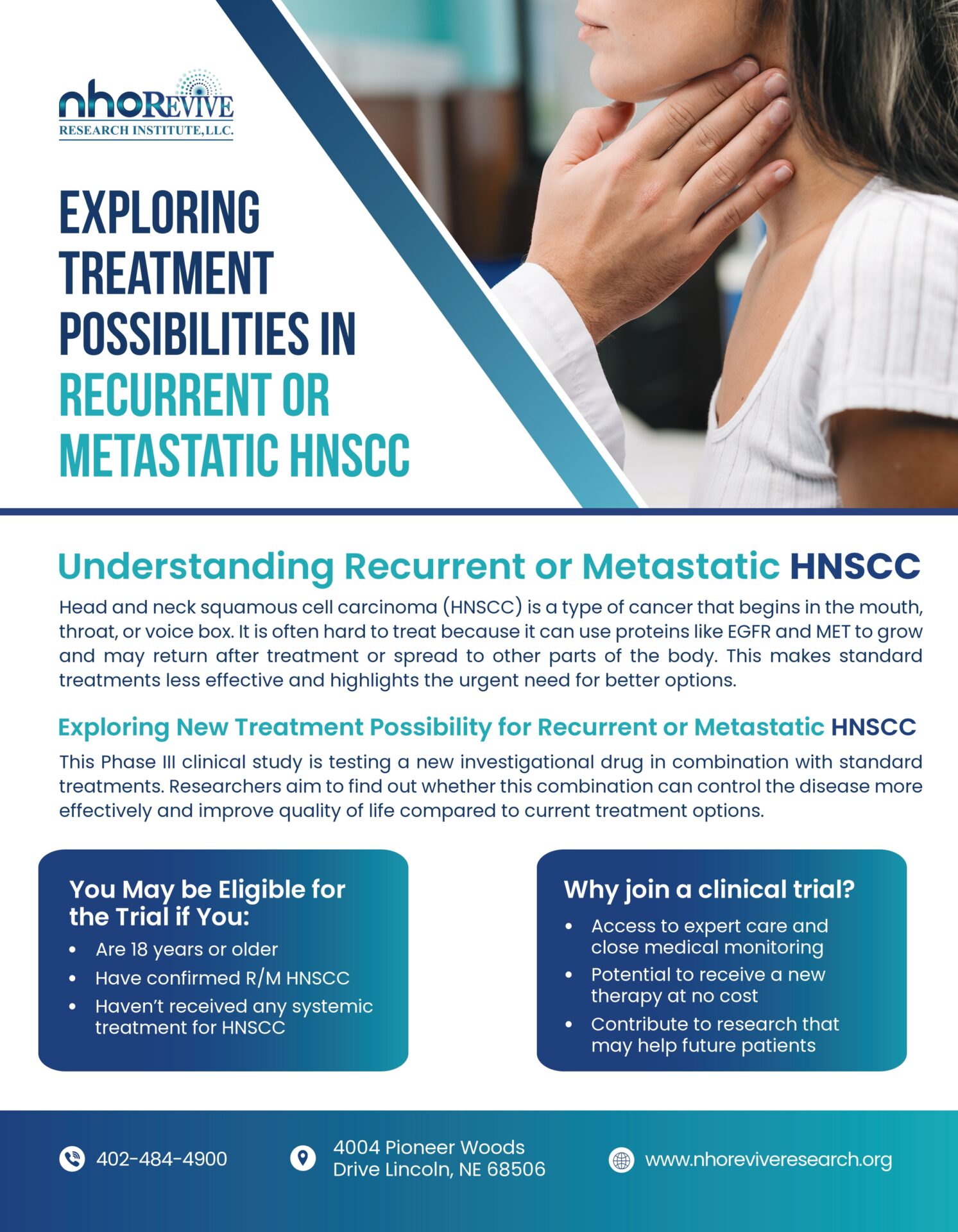
Head and neck squamous cell carcinoma (HNSCC) include cancers that start in the mouth, throat, sinuses, and salivary glands. This may lead to persistent throat pain, voice changes, difficulty chewing or swallowing, and other symptoms that can affect everyday activities and well-being. NHO Revive Clinical Research is conducting a clinical trial investigating a potential new drug to determine whether it can provide meaningful benefits beyond the current standard of care for individuals with HNSCC.
By taking part, you contribute to vital research that may guide the development of more effective therapeutics and approaches for diagnosing, treating, and supporting those affected by HNSCC in the years ahead.
Eligibility Criteria for Head and Neck Cancer Research Studies
- Age: 18 years and older
- Gender: Male
- The eligible primary tumor locations are the oral cavity, oropharynx, hypo pharynx, or larynx.
- Be willing and able to adhere to the lifestyle restrictions
*Participation in our clinical study is voluntary, and it’s important to consult with your healthcare provider before making any decisions related to your treatment or care.
*Participation in the clinical trials causes no expenses for you or your private medical insurance. You’ll receive compensation for your time and travel.
Status - Recruiting
About Symptoms of Head and Neck Squamous Cell Carcinoma and More
Most head and neck cancers begin with squamous cells. These are thin, flat cells that make up the outer layer of the skin, line the inside of the nose, mouth, and throat. Symptoms may include a sore in the mouth and pain when swallowing that won’t heal, coughing up blood, Hoarse voice, Ear pain Loose teeth and a lump in the neck that can be felt through the skin. Understanding the challenges of head and neck cancer is crucial for determining appropriate treatment options and effectively managing the condition.
Early detection of HNSCC can significantly improve treatment outcomes and long-term health. Participating in head and Neck Carcinoma Research Studies helps researchers explore potential new therapies and diagnostic methods that may benefit a broad range of individuals in the future.
Get Started
What to Expect
If you volunteer for NHO Revive clinical trial by completing the form above, our study team will reach out to assess your eligibility for this breast cancer clinical trial. They’ll review the study specifics with you to check if you meet the criteria for participation. If you qualify, you’ll be invited to the study site for screening, located within a 50-mile radius of where you are now.
The doctors will discuss the trial’s duration and its impact on your cancer treatment. Once everything is explained, participants will be asked to sign an informed consent form. Make sure to go through everything with your provider. We value transparency between our participants and investigators.
*You’ll receive study-related care at no cost, including comprehensive physical exams and evaluations conducted by skilled clinicians.
Age
18 years and older
Gender
Both Male & Female
Location
New Bedford, MA


300
Certificated Physicians in +20 States.
About Disease
Risk Factors for Individuals with Early Prostate Cancer/Prostate Tumor
Risk factors for head and neck squamous cell carcinoma (HNSCC) most often include long-term tobacco use, heavy alcohol consumption, and infection with high-risk HPV types such as HPV-16. Older age, male sex, and exposure to certain workplace irritants like wood dust or industrial chemicals can also raise risk. Poor oral hygiene and a weakened immune system may further contribute. Understanding these factors can help support timely monitoring and informed discussions with healthcare providers.
Frequently Asked Questions
Interested in learning more about our research? Explore our frequently asked questions to gain knowledge about this condition.
What are Head and Neck Cancer Clinical Trials?
A. Clinical trials are research studies that test new investigational treatments, diagnostic tools, or supportive care approaches. These studies help determine whether new therapies may be more effective or easier to tolerate than current standard care options.
Who can participate in Clinical Trials for Head and Neck Cancer?
Eligibility varies by study, but adults diagnosed with head and neck squamous cell carcinoma—whether newly diagnosed, recurrent, or metastatic—may qualify. Specific criteria are reviewed during a screening process by the research team.
What are the benefits of joining a Head and Neck Cancer Clinical Trial in New Bedford, MA?
Participants may:
- Access investigational treatments not widely available
- Receive care from specialists experienced in head and neck cancers
- Benefit from advanced monitoring, imaging, and evaluations
- Contribute to research that may improve treatment for future patients
- Potentially receive compensation for time and travel
Is Investigational Treatment for Head and Neck Cancer safe?
All clinical trial therapies undergo rigorous testing and FDA oversight. Participants are closely monitored, and safety is a top priority. Patients can withdraw at any time if they choose.
Will participating in a SCCHN Clinical Trials in Nebraska cost me anything?
Most clinical trials cover the cost of investigational treatment, study-related visits, and monitoring. Insurance may still be used for standard-of-care services. The research team will explain any costs beforehand.