Participate in our renal cell carcinoma clinical trials (RCC) and contribute to a pioneering renal cell cancer research study.
Renal Cell Carcinoma Clinical Trials
Emerging Future Treatment Options for Renal Cell Carcinoma through Clinical Trials in Nebraska
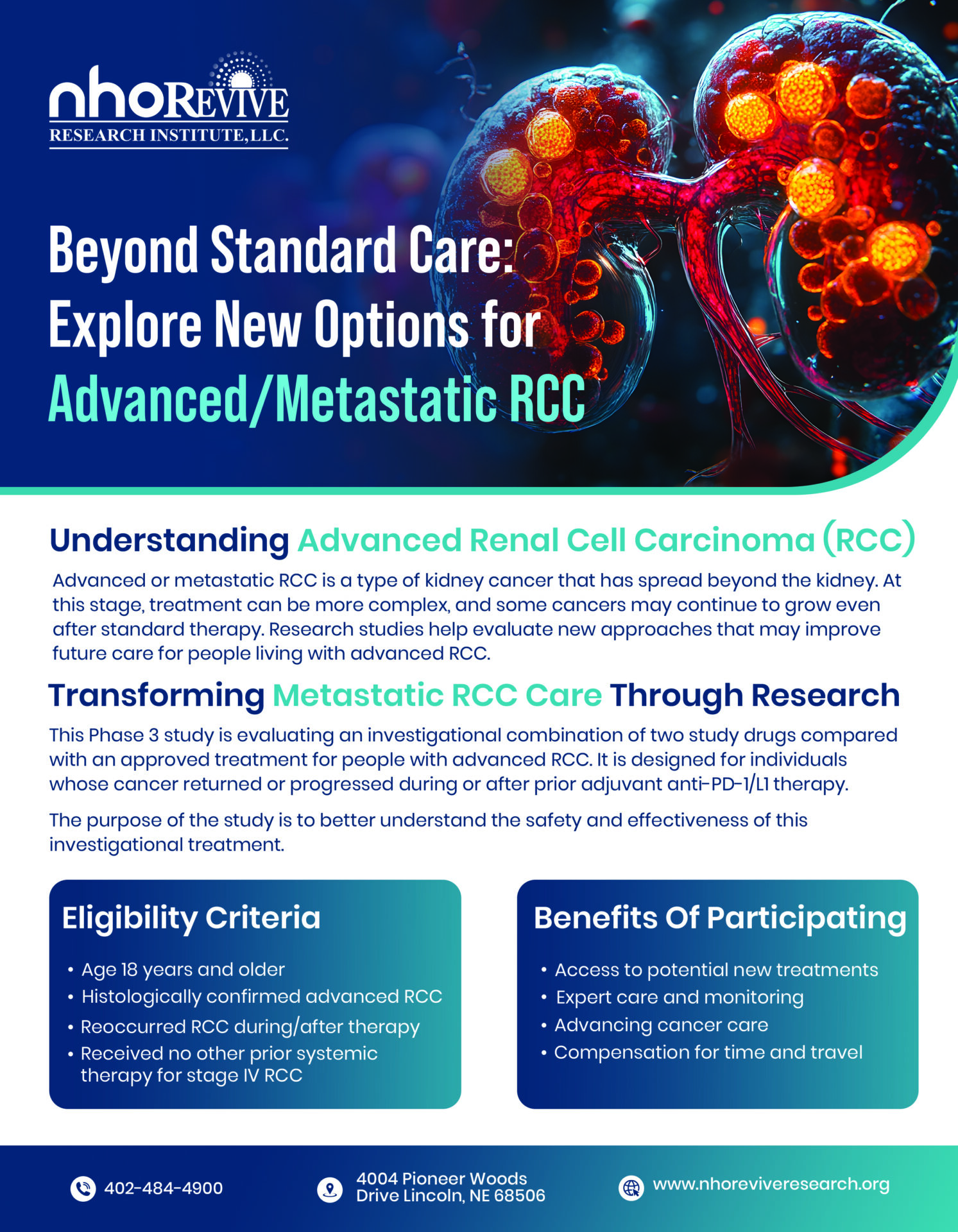
Renal Cell Carcinoma (RCC), the most common type of kidney cancer, develops when malignant cells form in the kidney’s filtering system. Symptoms may include persistent flank pain, blood in the urine, fatigue, unintended weight loss, or abdominal discomfort—factors that can influence daily functioning and overall quality of life. NHO Revive Clinical Research is conducting a clinical trial evaluating potential new therapy to determine whether it can deliver meaningful benefits beyond current standard treatment options for individuals living with RCC.
By participating, you play an important role in advancing research that may lead to more effective diagnostic tools, treatment strategies, and supportive care approaches for those facing RCC in the future.
Eligibility Criteria for Renal Cell Carcinoma Research Studies
- Age: 18 years or older
- Gender: Both Male & Female
- Confirmed diagnosis of unresectable, advanced RCC
- Has received no other prior systemic therapy for their RCC
*Participation in our clinical study is voluntary, and it’s important to consult with your healthcare provider before making any decisions related to your treatment or care.
*Participation in the clinical trials causes no expenses for you or your private medical insurance. You’ll receive compensation for your time and travel.
Status - Recruiting
About Symptoms of Renal Cell Carcinoma and More
RCC develops slowly, and the cause is still unknown. Most people don’t notice symptoms at an early stage. But it can progress to cause persistent lower back or flank pain, fever, night sweats, unexpected weight loss, a noticeable abdominal mass, or ongoing general discomfort that does not resolve. Understanding the challenges associated with RCC is essential for selecting the right treatment approach and effectively managing the disease.
Early detection of RCC can improve treatment outcomes and long-term health. Participating in Renal Cell Carcinoma Research Studies supports the advancement of potential new therapies and diagnostic approaches that may offer meaningful benefits to individuals now and in the future.
Get Started
What to Expect
If you volunteer for NHO Revive clinical trial by completing the form above, our study team will reach out to assess your eligibility for this breast cancer clinical trial. They’ll review the study specifics with you to check if you meet the criteria for participation. If you qualify, you’ll be invited to the study site for screening, located within a 50-mile radius of where you are now.
The doctors will discuss the trial’s duration and its impact on your cancer treatment. Once everything is explained, participants will be asked to sign an informed consent form. Make sure to go through everything with your provider. We value transparency between our participants and investigators.
*You’ll receive study-related care at no cost, including comprehensive physical exams and evaluations conducted by skilled clinicians.
Age
18 years and older
Gender
Both Male & Female
Location
New Bedford, MA


300
Certificated Physicians in +20 States.
About Disease
Risk Factors for Individuals with Renal Cell Carcinoma
RCC develops when abnormal cells multiply in an uncontrollable way inside the kidney tubules. Exact cause is unknown, but some scientists believe serval factors may make a person more likely to develop RCC. These include smoking, obesity, high blood pressure, chronic kidney disease, chronic hepatitis C infection, long term use of pain medicines, genetic mutations and family history. Understanding these factors can help support timely monitoring and informed discussions with healthcare providers.
Frequently Asked Questions
Interested in learning more about our research? Explore our frequently asked questions to gain knowledge about this condition.
What are Clinical Trials?
Clinical trials are research studies that test new investigational treatments, diagnostic tools, or supportive care approaches. These studies help determine whether new therapies may be more effective or easier to tolerate than current standard care options.
Who can participate in Investigational Treatment for Renal Cell Carcinoma?
A. Eligibility varies by study, but adults diagnosed with renal cell carcinoma—whether newly diagnosed, recurrent, or metastatic—may qualify. Specific criteria are reviewed during a screening process by the research team.
What are the benefits of joining a renal cell carcinoma Clinical Trial in New Bedford, MA?
Participants may:
- Access investigational treatments not widely available
- Receive care from specialists experienced in head and neck cancers
- Benefit from advanced monitoring, imaging, and evaluations
- Contribute to research that may improve treatment for future patients
- Potentially receive compensation for time and travel
How safe are investigational therapies for Renal Cell Carcinoma?
Investigational RCC treatments are carefully evaluated through multiple research phases and are closely reviewed by regulatory authorities. During the trial, healthcare professionals track your health, side effects, and treatment response to ensure your safety. You always have the option to stop participating if you feel it’s the right decision.
Do participating in Renal Cell Carcinoma clinical trials will cost me anything?
Many RCC trials provide the investigational drug, required tests, and trial-related appointments at no cost to participants. Routine medical care that is not part of the study may still be billed to your insurance. Before joining, the study team will clearly explain what is covered and what is not.