

Key Takeaways:
- Palate cancer is a rare type of oral cancer affecting the roof of the mouth.
- It can develop in the hard palate (bony front) or soft palate (muscular back).
- The most common type is oral squamous cell carcinoma.
- Early symptoms include bumps, sores, bleeding, difficulty swallowing, or voice changes.
- Risk factors include tobacco, alcohol, HPV, reverse smoking, poor nutrition, and weak immunity.
- Diagnosis involves physical exams, biopsies, and imaging tests.
- Treatment may include surgery, radiation, chemotherapy, or a combination of these.
- Rehabilitation for speech, swallowing, and dental function is important after treatment.
- Early detection significantly improves survival and quality of life.
Introduction
Palate cancer is a rare but serious form of oral cancer that develops on the roof of the mouth, medically known as the palate. Although it is not as common as tongue or lip cancer, it can still cause significant problems if it is not detected early. Therefore, understanding its warning signs, causes, and treatment options is essential for early diagnosis and better outcomes.
In this blog, we explain everything about palate cancer in simple terms, while also highlighting how clinical research is improving diagnosis and treatment options for people with palate cancer.
What Is Palate Cancer?
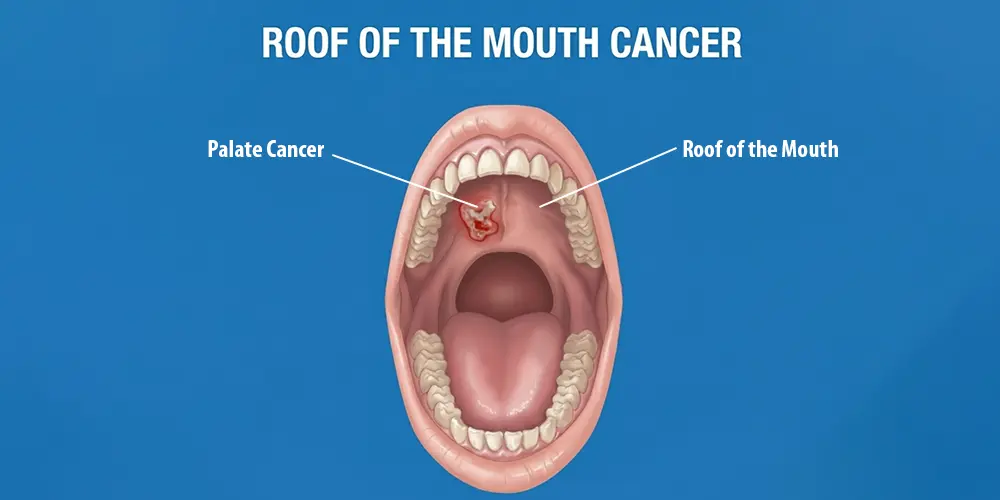
Palate cancer is a type of oral cancer that affects the roof of the mouth (palate). It occurs when abnormal cells of the palate grow uncontrollably. Over time, these abnormal cells can form a tumor and may spread to nearby tissues if left untreated.
The roof of the mouth has two sections: the hard palate, the bony front portion, and the soft palate, the muscular back portion. Cancer in these areas can present as a bump on the roof of mouth, an ulcer, or a persistent lesion that does not heal.
The most common type of palate cancer is oral squamous cell carcinoma, which arises from the thin, flat cells lining the mouth. However, because the palate also contains minor salivary glands, some tumors may develop from these glands and are called salivary gland cancer.
Types of Palate Cancer
The palate is divided into two parts, and cancer can develop in either area.
Hard Palate Cancer
The hard palate is the bony front portion of the roof of the mouth. Cancer in this area is usually considered part of oral cavity cancer. Because this area is firm, tumors may feel like lumps or ulcers that do not heal.
Soft Palate Cancer
The soft palate is the flexible tissue at the back of the mouth. Cancer here is often grouped with oropharyngeal cancers. As a result, it may affect swallowing, speech, and breathing earlier than hard palate cancer.
Other Types of Oral Cancer
Oral cancer not only affects the palate it also affects other parts of the mouth and throat. Therefore, some other types of oral cancer include:
- Tongue cancer – Tumors developing on the surface or underside of the tongue
- Lip cancer – Malignant tumors developing on the upper or lower lips
- Gum cancer – Malignancies arising from the gums or periodontal tissues
- Throat cancer – Cancer affecting the pharynx or larynx
- Cancer on the floor of the mouth – Tumors under the tongue
- Buccal mucosa (inner cheeks) cancer – Cancer developing in the lining of the cheeks
If you want to learn more about these types, participate in our head and neck cancer clinical trials and gain access to potential new treatments and advanced care options.
How Common Is Palate Cancer?
Palate cancer is uncommon but remains an important subset of oral cancers. Hard palate cancer accounts for about 1–5% of all oral cancers, while soft palate cancer makes up roughly 5–12% of oropharyngeal cancers. Globally, oral and throat cancers cause hundreds of thousands of new cases each year, especially in regions with high tobacco and betel nut use.
Although these numbers are relatively small, the impact on quality of life can be significant, particularly when the diagnosis is delayed. Ongoing oncology research continues to improve understanding, early detection, and treatment options for both hard and soft palate cancers.
Signs and Symptoms
Recognizing the symptoms of cancer on roof of the mouth early is crucial for treatment and prognosis. Some warning signs include:
- A sore or ulcer on the roof of the mouth that does not heal
- A lump, thickened area, or swelling on the palate
- Bleeding from the mouth without a clear reason
- Loose teeth or dentures that suddenly no longer fit
- Difficulty swallowing or chewing
- Speech changes or a nasal-sounding voice
- Persistent bad breath
- Pain in the mouth, jaw, or ear
- A lump in the neck, which may indicate spread to lymph nodes
Because these symptoms can resemble other oral conditions, anyone noticing them for over two weeks should consult a doctor promptly. Early detection significantly improves treatment outcomes.
Causes and Risk Factors
While the exact cause of palate cancer is not always known, several risk factors are strongly linked to its development. These may include:
Tobacco Use
Smoking or using smokeless tobacco greatly increases the risk of palate cancer by exposing the mouth tissues to harmful chemicals.
Heavy Alcohol Consumption
Alcohol irritates the mouth lining and, when combined with tobacco, further increases cancer risk.
Human Papillomavirus (HPV)
Certain high-risk HPV strains are linked to soft palate and throat cancers, especially in younger adults.
Reverse Smoking
Placing the lit end of a cigarette inside the mouth exposes the hard palate to intense heat and smoke, raising cancer risk.
Poor Nutrition and Weak Immunity
A lack of fruits and vegetables and a weakened immune system can reduce the body’s ability to repair damaged cells.
Patients with multiple risk factors should undergo regular dental and medical checkups.
How Is Palate Cancer Diagnosed?
Early diagnosis plays a crucial role in treatment success. Doctors usually follow several steps to confirm palate cancer:
- Physical examination of the mouth and throat
- Biopsy, where a small tissue sample is taken and examined under a microscope
- Imaging tests such as CT scans, MRI, or PET scans to determine tumor size and spread
Treatment Options for Palate Cancer
Treatment depends on the location, size, and stage of the cancer, as well as the patient’s overall health. In many cases, a combination of treatments is used.
Surgery
Surgery is usually the main treatment, especially for hard palate cancer. The goal is to remove the tumor fully and reconstructive surgery may be needed to help with speech and swallowing.
Radiation Therapy
Radiation therapy uses high-energy rays to kill cancer cells. It may be given after surgery or used alone if surgery is not possible.
Chemotherapy
Chemotherapy uses medicines to destroy or slow the growth of cancer cells. It is commonly combined with radiation in advanced stages.
Combined Treatment
In later stages, a combination of surgery, radiation, and chemotherapy is often recommended for better cancer control.
Living with Palate Cancer
Patients diagnosed with mouth roof tumors need comprehensive care. Speech, swallowing, and dental rehabilitation are important after surgery, while emotional support and nutrition guidance help improve quality of life.
Regular follow-ups are essential to monitor for recurrence and manage treatment side effects. Early intervention is key to better outcomes, making awareness of cancer on the roof of the mouth symptoms critical. For those seeking additional options, clinical trials for oncology can provide access to potential new treatments and cutting-edge care.
Conclusion
In conclusion, palate cancer is a rare type of oral cancer; however, it should never be overlooked. Because early symptoms can appear mild or painless, many people delay seeking help. However, early diagnosis can significantly improve treatment success and quality of life.
Furthermore, for those interested in advanced treatment options, participation in clinical research studies in Nebraska may provide access to potential new therapies for managing hard palate cancer, soft palate cancer, and other oral malignancies.
Frequently Asked Questions
What are the signs of roof of mouth cancer?
Common signs include a persistent bump or sore on the roof of the mouth, bleeding, pain, red or white patches, and difficulty swallowing.
How to detect palate cancer early?
Early detection involves regular dental check-ups, noticing unusual lumps or sores on the palate, and getting a biopsy if any persistent lesions appear.
How long can I live with upper mouth cancer?
Survival depends on cancer type, stage, and treatment. However, early-stage palate cancer has a higher survival rate, while advanced stages may reduce life expectancy, making early diagnosis crucial.