
Join our bladder cancer clinical trial evaluating an investigational treatment for high-risk non-muscle invasive bladder cancer and help advance research toward potential new care options.

Bladder Cancer Clinical Trials
Research on Potential New Treatment Options for High-Risk Bladder Cancer
Looking Beyond Standard Treatment for Bladder Cancer
Researchers are studying potential new ways to treat high-risk non-muscle invasive bladder cancer (HR NMIBC). This type of cancer affects the inner lining of the bladder but has not spread into the muscle or outside the bladder. Some cases include carcinoma in situ (CIS), which is a flat form of cancer in the bladder’s inner layer. High-risk NMIBC means the cancer may have a high chance of getting worse or returning after treatment.
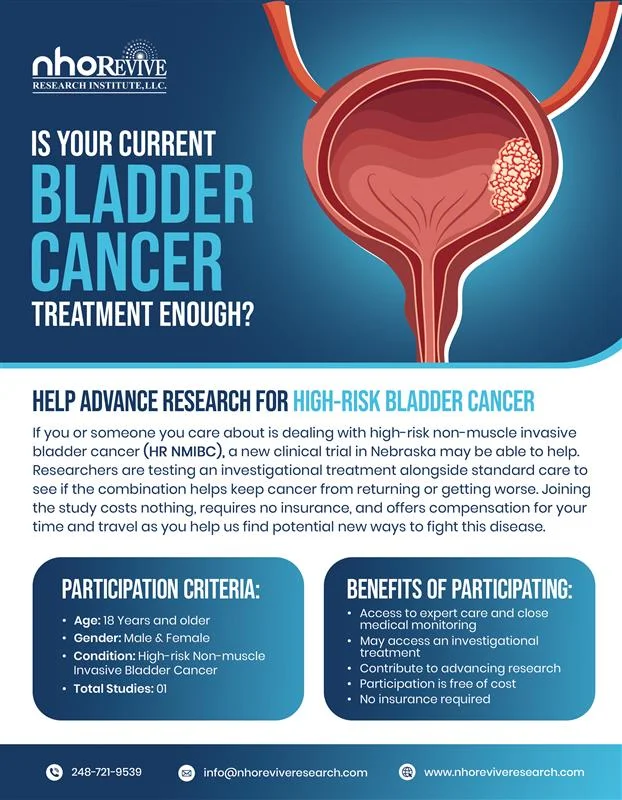
The usual treatment is TURBT to remove the tumor, followed by BCG immunotherapy, which helps the immune system fight cancer. However, BCG does not work for everyone. Researchers are testing an investigational treatment for bladder cancer along with BCG to see if it improves outcomes. The goal is to determine whether this combination leads to better overall results compared to standard treatment alone.
Eligibility Criteria for Bladder Cancer Clinical Trials
- 18 Years and Older
- Male and Female
- Has a High Risk of Bladder Cancer
- Total Studies: 01
*Participation in our clinical study is voluntary, and it’s important to consult with your healthcare provider before making any decisions related to your treatment or care.
*Participation in the clinical trials causes no expenses for you or your private medical insurance. You’ll receive compensation for your time and travel.
Regulatory & Study Information
This clinical study is conducted in accordance with applicable regulatory and ethical guidelines to help ensure participant safety, data integrity, and research transparency. Additional details about the study, including objectives, eligibility criteria, and study design, are available through official clinical trial registries.
V940-011 – Non-Muscle Invasive High Risk Bladder Cancer (mRNA Vaccine)
This study is reviewed by the Advarra Institutional Biosafety Committee (IBC) to ensure adherence to established biosafety standards and oversight requirements.
Status - Recruiting
Non-Muscle Invasive Bladder Cancer: Symptoms You Should Not Ignore
Non-muscle invasive bladder cancer is a type of bladder cancer where abnormal cells grow in the inner lining of the bladder but have not spread into the muscle layer. It is often found at an early stage and can usually be treated effectively when diagnosed on time. However, it may come back in some cases, so regular follow-up is important.
Common symptoms of bladder cancer include blood in the urine or hematuria. Some people may also experience frequent urination, pain or burning during urination, and a sudden urge to urinate. In some cases, symptoms may be mild or not noticeable in the early stages, which is why timely screening and medical evaluation are important.
Get Started
What to Expect
If you volunteer for the NHO Revive Bladder Cancer clinical trial by completing the form above, our study team will contact you to assess your eligibility. They will review the study details with you to determine whether you meet the criteria for participation.
If you qualify, you will be invited to a study site for screening located within a 50-mile radius of your current location. The study team will explain the trial duration and how it may relate to your treatment. Once all information is clearly shared, participants will be asked to provide informed consent. We encourage you to review all details carefully with your healthcare provider. We value clear communication and transparency between participants and investigators.
Age
18 Year and Older
Gender
Male and Female
Location
Nebraska


+
300
Certificated Physicians in +20 States.
About Disease
Factors That May Lead to NMIBC
Primary risk factors for developing non-muscle invasive bladder cancer (NMIBC) include smoking, which is the leading cause and significantly increases risk. Long-term exposure to certain chemicals used in industries like dye, rubber, leather, paint, and petroleum also raises the risk. Age is another factor, with most cases occurring in people over 55, and men are affected more often than women.
Long-term bladder issues, such as recurrent UTIs, bladder stones, or chronic catheter use, can contribute to risk. Previous radiation therapy to the pelvis or certain chemotherapy drugs may increase the risk. Moreover, a family history of bladder cancer or certain inherited genetic mutations, such as Lynch syndrome, may increase susceptibility.
Frequently Asked Questions
Here are answers to some common questions about this bladder cancer clinical trial:
What is the purpose of this bladder cancer clinical trial?
This study aims to evaluate an investigational treatment for high-risk non-muscle invasive bladder cancer and determine if it improves outcomes when combined with standard therapy.
Who can participate in this bladder cancer clinical trial?
Adults aged 18 and older with high-risk non-muscle invasive bladder cancer may be eligible to participate.
What is the goal of this clinical trial?
The goal of this study is to determine whether people who receive the investigational treatment along with standard treatment have improved outcomes compared to those who receive standard treatment alone.
Are there any costs involved in participating?
No, participation in the study does not involve any cost to you or your insurance. Compensation may also be provided for time and travel.
What happens after I apply for the study?
After submitting your information, the study team will contact you to assess your eligibility. If you qualify, you will be invited for screening. They will explain all the details, and you can then decide whether to give your consent to participate.