Key Takeaways
- Fungating breast cancer is not a separate stage of breast cancer but a clinical presentation of advanced disease.
- It is most commonly seen in Stage III (locally advanced) and Stage IV (metastatic) breast cancer.
- The condition occurs when a tumor breaks through the skin, forming an open, ulcerating wound.
- Cancer staging is based on the TNM system (Tumor, Node, Metastasis), not on the presence of fungation alone.
- Fungating tumors usually indicate aggressive or long-untreated cancer progression.
- In Stage III, the cancer may be locally advanced with no distant spread, while in Stage IV, it has spread to other organs.
- The presence of fungation does not automatically change the cancer stage—detailed diagnostic tests are needed.
- Treatment focuses on both cancer control and symptom management, such as wound care, pain relief, and infection prevention.
- Early detection and timely treatment can help prevent progression to advanced, fungating disease.
Breast cancer is classified into stages based on how far it has grown and whether it has spread beyond the breast. These stages help doctors decide the most appropriate treatment plan and understand the likely outcome of the disease. Among the more visually and physically distressing presentations of advanced breast cancer is fungating breast cancer, which often raises an important question: What stage is it actually associated with?
Fungating breast cancer is not a separate stage in itself. Instead, it is a clinical condition that occurs when a tumor grows through the skin and forms an open, ulcerating wound. Understanding its connection to staging is important for patients, caregivers, and families trying to make sense of the disease progression.
So, What Stage Is Fungating Breast Cancer?
Fungating breast cancer is most commonly associated with advanced breast cancer, specifically Stage III or Stage IV.
However, it is important to understand that fungation is not a stage by itself. Breast cancer staging is determined by the TNM system:
- T (Tumor): size and local extent
- N (Nodes): lymph node involvement
- M (Metastasis): spread to distant organs
Fungating changes reflect local tumor progression and skin involvement, which can occur in advanced stages, but the exact stage depends on whether the cancer has spread beyond the breast.
In general:
- Stage III: Often linked with locally advanced breast cancer, where the tumor has spread to the skin or chest wall but may not have distant metastasis
- Stage IV: Occurs when cancer has spread to distant organs such as the bones, liver, lungs, or brain. A fungating breast mass can be present alongside systemic spread of the disease.
So, while fungating breast cancer strongly suggests advanced disease, it does not define the stage on its own.
Fungating Breast Cancer in Stage III
In Stage III breast cancer, the disease is considered locally advanced. At this point, the tumor may have grown significantly within the breast and spread to nearby lymph nodes or surrounding tissues.
When fungation occurs in Stage III, it means the tumor has broken through the skin but has not yet spread to distant parts of the body. This can happen when cancer is aggressive or when diagnosis and treatment have been delayed.
Despite being advanced, Stage III breast cancer is often treated with the goal of curing the disease and preventing recurrence. Treatment usually involves a combination of chemotherapy, surgery, radiation therapy, and sometimes targeted therapies. The presence of a fungating wound, however, may make treatment more complex and require additional wound care and symptom management.
Fungating Breast Cancer in Stage IV
In Stage IV breast cancer, the cancer has spread beyond the breast to distant organs. This is also known as metastatic breast cancer.
When fungating breast cancer occurs in Stage IV, it is part of a broader systemic disease. The breast tumor may still be large and ulcerated, but the key defining factor is the presence of metastasis.
At this stage, treatment is generally not aimed at curing the disease but at controlling its spread, slowing progression, and improving quality of life. Therapies may include chemotherapy, hormone therapy (if applicable), targeted therapy, and palliative care.
Even though Stage IV breast cancer is advanced, treatment can still help manage symptoms, reduce tumor size, and improve comfort, including care for fungating wounds.
Clinical trials are also being conducted for metastatic breast cancer at NHO Revive, exploring investigational treatment options that may help improve outcomes and expand future care possibilities.
Why Fungating Breast Cancer Indicates Advanced Disease
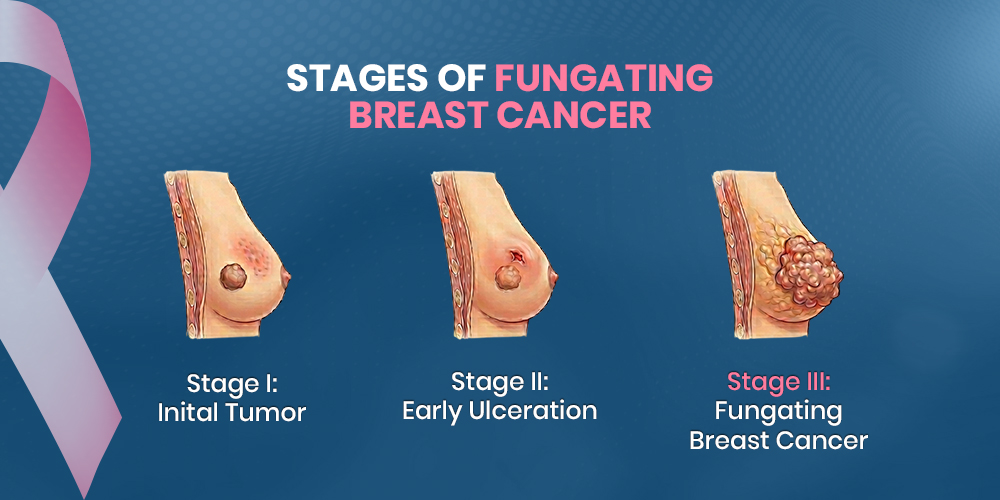
Fungating breast cancer occurs when a tumor grows aggressively enough to break through the skin, leading to an open, ulcerated wound. This typically does not happen in early-stage breast cancer because the disease is still confined within the breast tissue. Its presence suggests significant tumor growth and local tissue destruction, often involving the skin and sometimes deeper structures such as the chest wall.
Association with Advanced Stages and Disease Progression
In many cases, fungating changes are linked to locally advanced (Stage III) or metastatic (Stage IV) breast cancer. It often reflects prolonged, undiagnosed growth or biologically aggressive disease. Since cancer staging is based on the extent of internal spread rather than surface appearance alone, fungating wounds are considered a strong indicator of advanced disease that requires comprehensive evaluation and specialized management.
Does Fungation Change the Cancer Stage?
A common misconception is that fungating breast cancer represents a specific stage. However, this is not the case.
The presence of a fungating wound does not automatically change the cancer stage. Staging is based on the TNM classification system, which evaluates tumor size, lymph node involvement, and metastasis. Fungation is considered a physical manifestation of tumor progression, not a staging criterion.
For example:
- A patient with a large tumor breaking through the skin but no distant spread may still be classified as Stage III.
- A patient with similar skin involvement but also with metastasis would be classified as Stage IV.
This is why proper diagnostic testing is essential to determine the true stage.
How Doctors Determine the Exact Stage
To accurately stage breast cancer, including cases with fungation, doctors perform a series of evaluations:
- Physical Examination:
Assessing the size and appearance of the tumor and skin involvement - Imaging Tests:
Mammograms, ultrasounds, MRI scans, CT scans, or PET scans - Biopsy:
Confirming cancer type and aggressiveness - Metastatic Evaluation:
Checking whether cancer has spread to lymph nodes or distant organs
These tests help ensure that treatment is tailored to the patient’s specific condition rather than based on appearance alone.
Why Knowing the Stage Matters
Understanding the stage of breast cancer is essential because it directly influences treatment decisions and expectations.
- In Stage III, treatment may still aim for cure or long-term control.
- In Stage IV, the focus shifts toward controlling disease progression and improving quality of life.
For patients with fungating breast cancer, staging also helps determine the intensity of treatment and the need for supportive care such as wound management, pain control, and infection prevention.
Accurate staging ensures that patients receive appropriate care that balances effectiveness with comfort.
Read more: Is Fungating Breast Cancer Terminal? – An Overview
Conclusion
Fungating breast cancer is not a separate stage but a sign of advanced breast cancer, most commonly seen in Stage III or Stage IV disease. It occurs when a tumor grows through the skin, leading to an open, ulcerated wound.
While its appearance can be alarming, the stage of breast cancer is determined by how far the disease has spread inside the body, not just how it looks on the surface. This means that a thorough medical evaluation is essential to determine the exact stage and guide treatment.
Early detection remains the most effective way to prevent progression to such advanced presentations, highlighting the importance of regular screening and timely medical attention.