
Key Takeaways:
- A lung tumor can be benign (non-cancerous) or malignant (cancerous lung tumor), with the latter being more common and serious.
- Early detection is vital, as signs of a lung tumor are often subtle and can mimic a common lung infection.
- Survival rates vary significantly depending on the stage and type, such as Adenocarcinoma of Lung or Large Cell Lung Carcinoma (LCLC).
- Modern oncology clinical research is rapidly advancing treatment options, including targeted therapies and immunotherapy.
- Understanding the difference between primary and metastatic lung cancer is essential for determining the correct treatment path.
Introduction
Discovering a tumor in lung tissue is a life-altering moment that brings a wave of questions and concerns. Whether found incidentally during an X-ray for another issue or discovered after persistent symptoms, understanding the nature of a lung neoplasm is the first step toward effective management.
What Is a Lung Tumor?
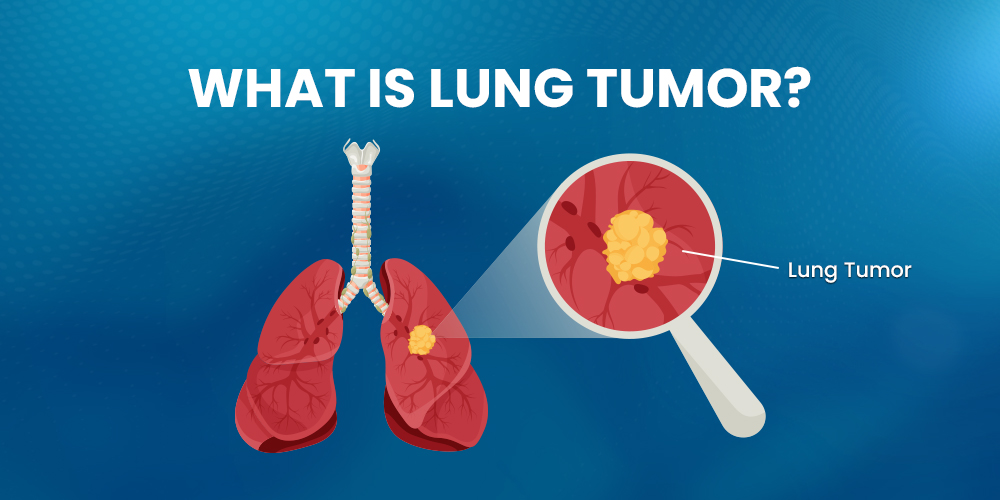
A lung tumor refers to an abnormal growth of cells in the lung tissue. These growths can be benign (non-cancerous) or malignant (cancerous). Malignant lung tumors are commonly associated with lung cancer and are among the leading causes of cancer-related deaths worldwide.
Lung tumors may originate in the lungs themselves or spread from other organs (metastatic tumors). According to medical classifications, lung cancer primarily includes Non-Small Cell Lung Cancer (NSCLC) and Small Cell Lung Cancer (SCLC), which differ in growth rate, severity, and treatment response.
Cancerous Lung Tumor
A cancerous lung tumor is a malignant growth that spreads uncontrollably and can invade nearby tissues or metastasize to other organs such as the brain, liver, or bones.
The main types include:
- NSCLC (Non-Small Cell Lung Cancer) – most common
- SCLC (Small Cell Lung Cancer) – aggressive and fast-spreading
Cancerous tumors arise due to genetic mutations that cause abnormal cell division in lung tissues. Smoking remains the leading risk factor, but exposure to radon gas, asbestos, air pollution, and genetic predisposition also contribute.
Specialized Tumors
- Pancoast Tumor: A tumor located at the very top (apex) of the lung, which can cause unique symptoms like shoulder pain or drooping eyelids.
- Neuroendocrine Cancer: These tumors arise from cells that release hormones into the blood in response to signals from the nervous system.
How Common Is It?
Lung tumors are among the most frequently diagnosed neoplasms globally. Lung cancer remains the leading cause of cancer-related deaths, highlighting the importance of understanding lung tumor survival rate statistics and the need for early screening.
Who Is at Risk?
While smoking is the primary risk factor, non-smokers are also at risk due to radon gas exposure, secondhand smoke, and environmental pollutants. Additionally, many wonder, is lung cancer hereditary? While most cases are linked to environmental factors, certain genetic predispositions can increase vulnerability.
Lung Tumor Survival Rate
Survival rates depend heavily on:
- Stage at diagnosis
- Type of lung cancer
- Patient’s overall health
- Treatment response
General survival statistics:
- Localized lung cancer: 60% + 5-year survival
- Regional spread: 30–40%
- Distant metastasis: 7%
NSCLC generally has better survival outcomes than SCLC, which is more aggressive and often diagnosed late
Lung Tumor Symptoms
Recognizing lung tumor symptoms early can be difficult because the lungs have few nerve endings, meaning a tumor can grow quite large before causing pain.
Early Signs to Watch For
Early signs of a lung tumor often include a persistent cough that doesn’t go away after two or three weeks, or a change in a long-standing “smoker’s cough.”
Symptoms are generally similar across genders, including:
- Shortness of breath.
- Wheezing.
- Chest pain that worsens with deep breathing or coughing.
- Coughing up blood (hemoptysis).
When Symptoms Are Not Visible
In many cases, a tumor is asymptomatic in its early stages. It may only be found when it causes a secondary issue, such as a persistent lung infection like pneumonia that keeps returning to the same spot.
Lung Infection
A lung infection (such as pneumonia or bronchitis) can sometimes mimic lung tumor symptoms like cough, chest pain, and fatigue.
However:
- Infections usually improve with antibiotics
- Tumors persist or worsen over time
Doctors often perform imaging to differentiate between infection and malignancy.
Is Lung Cancer Hereditary?
Lung cancer is not strictly hereditary, but genetic mutations and family history can increase risk. Environmental factors like smoking still play the dominant role in most cases.
Malignant Pleural Effusion
This condition occurs when cancer causes fluid buildup between the lungs and chest wall, leading to breathing difficulties. It often indicates advanced lung cancer.
Metastatic Lung Cancer
Metastatic lung cancer refers to cancer that has spread from the lungs to other organs. It is considered advanced stage disease and requires systemic therapy such as chemotherapy, immunotherapy, or targeted treatment.
Adenocarcinoma of Lung
Adenocarcinoma of Lung is the most common type of NSCLC. It often develops in the outer parts of the lung and is frequently seen in non-smokers as well. It tends to grow slower compared to other lung cancers.
Small Cell Lung Cancer Clinical Trials
Clinical trials for SCLC focus on improving survival using immunotherapy, chemotherapy combinations, and targeted drugs. SCLC is aggressive, so research is essential for better outcomes.
Researchers are currently studying:
- Immune checkpoint inhibitors combined with chemotherapy
- Targeted therapies aimed at specific genetic mutations
- Antibody-drug conjugates (ADCs)
- Radiation therapy optimization
- Combination treatment strategies for recurrent disease
Many Small Cell Lung Cancer Clinical Trials also evaluate ways to reduce treatment resistance and improve quality of life for patients with advanced-stage disease. Because SCLC tends to spread rapidly, clinical trials are considered an important option for eligible patients seeking access to emerging therapies under medical supervision.
Non-Small Cell Lung Cancer Clinical Trials
NSCLC clinical trials explore advanced treatments like immunotherapy, targeted therapy, and personalized medicine approaches aimed at improving survival and reducing side effects.
Current Non-Small Cell Lung Cancer Clinical Trials are investigating:
- EGFR-targeted therapies
- ALK and ROS1 inhibitors
- Personalized immunotherapy combinations
- Cancer vaccines
- Biomarker-driven treatments
Clinical research studies in Nebraska and other regions contribute to advancing lung cancer treatment by testing new drugs, therapies, and diagnostic tools in controlled environments. Many clinical research centers in Nebraska collaborate with national oncology networks to help patients access innovative therapies and specialized cancer care. Participation in clinical research studies may also help researchers better understand treatment responses across diverse patient populations.
Conclusion
Lung tumors are complex conditions ranging from benign nodules to aggressive cancers like NSCLC and SCLC. Early detection remains the most important factor in improving survival rates and treatment success. Regular screening, especially for high-risk individuals, plays a crucial role in reducing lung cancer-related deaths.
Frequently Asked Questions
Is lung cancer a solid tumor?
Lung cancer is classified as a solid tumor, meaning it forms a mass in lung tissue rather than affecting blood or bone marrow like leukemia.
How serious is a tumor on the lung?
A lung tumor can range from benign to life-threatening. Malignant tumors are serious because they can grow quickly, spread to other organs, and affect breathing and overall organ function.
Can a lung tumor be cured?
Early-stage lung tumors may be cured with surgery, while advanced stages require long-term management through chemotherapy, radiation, or immunotherapy.