Key Takeaways
- Melanoma is a serious type of skin cancer that can spread quickly if not treated early.
- It often starts as a new mole or changes in an existing mole.
- Warning signs include asymmetry, color changes, irregular borders, and growth over time.
- A skin spot that bleeds, itches, or does not heal should always be checked by a doctor.
- Melanoma can appear anywhere on the body, including nails, eyes, and hidden skin areas.
- There are different types, such as nodular, amelanotic, mucosal, and metastatic melanoma.
- The best way to confirm melanoma is through a skin biopsy.
- Treatment depends on the stage and may include surgery, immunotherapy, targeted therapy, or radiation.
- Early detection greatly improves the chances of successful melanoma treatment.
- Some patients may also access new options through clinical trials and research studies.
- You can lower risk by using sunscreen, avoiding tanning beds, and checking your skin regularly.
- Early-stage melanoma cancer is often highly treatable, while advanced cases require more complex care.
Melanoma is one of the most serious forms of skin cancer because it can grow quickly and spread to other parts of the body if not found early. While many skin spots are harmless, some changes in the skin may signal melanoma cancer and should never be ignored. Learning the warning signs, risk factors, and available treatment options can help save lives.
Although melanoma is less common than some other forms of skin cancer, it causes a large number of skin cancer deaths worldwide. The good news is that early-stage melanoma cancer is often highly treatable. With regular skin checks and timely medical care, outcomes can improve significantly.
In this blog, we will explore melanoma, its symptoms, causes, and the melanoma treatment options, and understand why early detection is important in melanoma cancer.
What Is Melanoma?
Melanoma starts when melanocytes become damaged and begin multiplying in an uncontrolled way. These cells are responsible for skin color, which is why suspicious moles or dark spots are often linked to this disease. If not treated early, melanoma cancer can move into deeper skin layers and spread to organs such as the lungs, liver, brain, or lymph nodes.
Unlike some slower-growing skin cancers, melanoma can become life-threatening if ignored. However, when caught early, treatment success rates are often very high. This is why regular skin checks and medical attention are so important.
Common Melanoma Symptoms
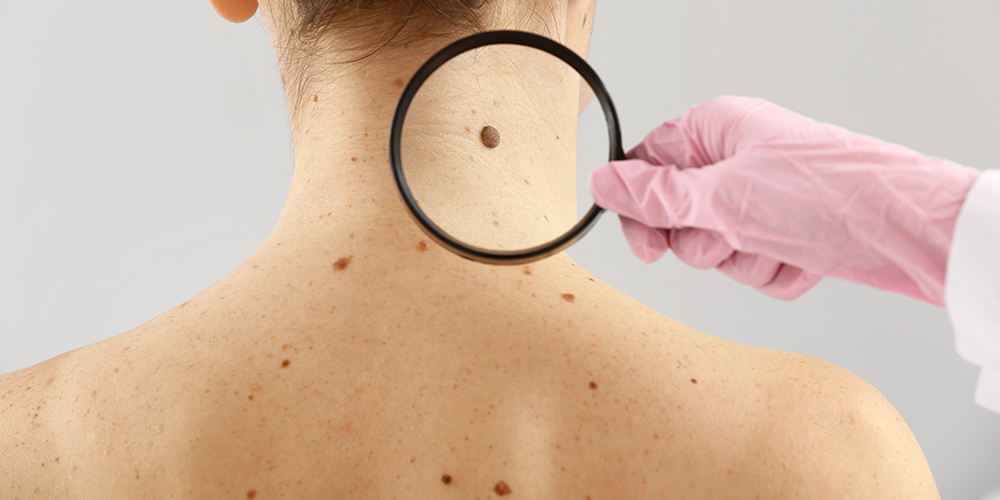
The most common sign of melanoma is a new mole or a change in an existing mole. Many doctors use the ABCDE rule to help identify warning signs of melanoma cancer:
- A – Asymmetry: One half does not match the other
- B – Border: Edges are irregular or blurred
- C – Color: Multiple shades of brown, black, red, or white
- D – Diameter: Larger than 6 mm, though smaller spots can also be dangerous
- E – Evolving: Changes in size, shape, or color over time
Other symptoms of melanoma may include a skin spot that bleeds or itches, crusting, tenderness, or a sore that does not heal. If you notice these changes, a healthcare provider should examine the area promptly.
Where Melanoma Can Appear
Melanoma can appear anywhere on the body, not only in sun-exposed areas. In men, it often develops on the back or chest. In women, it is more common on the legs. However, melanoma cancer may also form on the scalp, face, neck, hands, feet, and under fingernails or toenails.
Rare forms of melanoma can affect the eyes, mouth, nose, or genital areas. Because it can occur in unexpected places, full-body skin checks are valuable.
Types of Melanoma
Melanoma is classified based on how it grows, where it appears in the body, and its biological behaviour. Below are the main clinically recognized types of malignant melanoma:
Superficial Spreading Melanoma
This is the most common type of melanoma. It usually starts as a flat or slightly raised patch that slowly spreads across the surface of the skin before growing deeper.
Nodular Melanoma
Nodular melanoma is one of the most aggressive forms. It often appears as a dark or black raised lump and tends to grow downward into the skin quickly, making early detection very important.
Lentigo Maligna Melanoma
Lentigo maligna melanoma usually develops in older adults on sun-exposed areas such as the face. It often begins as a flat, discolored patch and grows slowly over time.
Acral Lentiginous Melanoma
Acral lentiginous melanoma is a rare type that appears on areas not commonly exposed to the sun, such as the palms of the hands, soles of the feet, or under the nails. It is more common in people with darker skin tones.
Amelanotic Melanoma
Amelanotic melanoma lacks dark pigment, so it may appear pink, red, or skin-colored. Because it does not look like a typical mole, it is often diagnosed later.
Mucosal Melanoma
Mucosal melanoma develops in the mucous membranes of the body, such as the nose, mouth, throat, or genital areas (vulvar melanoma). It is rare but often difficult to detect early.
Subungual Melanoma
Subungual melanoma occurs under the fingernails or toenails. It may appear as a dark streak or discoloration that does not grow out with the nail.
Ocular Melanoma
Ocular melanoma affects the eye, most commonly the uvea. It may cause vision changes, blurred vision, or dark spots in the eye.
Metastatic Melanoma
Metastatic melanoma refers to melanoma that has spread from the original site to other parts of the body, such as lymph nodes, lungs, liver, or brain. This is an advanced stage requiring systemic treatment.
How Melanoma Is Diagnosed
Doctors usually begin by examining the skin carefully. If a suspicious spot is found, a biopsy may be recommended. During a biopsy, part or all of the mole is removed and tested in a laboratory. This is the most accurate way to confirm melanoma.
If melanoma cancer is diagnosed, additional scans or lymph node tests may be used to determine whether it has spread. This process is called staging. Staging helps doctors choose the best treatment plan.
Treatment Options for Melanoma
Treatment for melanoma depends on the stage and overall health of the patient.
- Surgery: Often the first choice for early melanoma cancer, where the tumor is removed along with a small area of healthy skin.
- Immunotherapy: Helps the immune system attack melanoma cells and is commonly used in advanced cases.
- Targeted Therapy: Focuses on specific gene changes that drive melanoma cancer growth.
- Radiation Therapy: Used when surgery is not possible or if melanoma has spread.
- Chemotherapy: Less common today but still used in some cases.
Beyond these standard treatment approaches, some patients may also explore solid tumor clinical trials for access to new and emerging treatments for melanoma cancer.
The Role of Clinical Research
Clinical research plays a key role in improving care for people with melanoma cancer. It helps researchers test new treatments, improve existing therapies, and reduce side effects to achieve better patient outcomes.
Through the benefits of clinical research, patients may gain access to innovative treatment options, close medical monitoring, and contribute to future cancer care advancements.
Many studies fall under clinical trials for oncology, focusing on developing safer, more effective, and personalized treatments for melanoma and other cancers.
Overall, clinical research continues to improve survival rates, expand treatment options, and enhance quality of life for people living with melanoma.
Is Melanoma Curable?
Many people ask, Is melanoma curable? The answer depends on the stage at diagnosis. Early-stage melanoma that is removed before spreading can often be cured. Once melanoma cancer spreads to distant organs, treatment becomes more complex, but many patients still benefit from newer therapies.
Can Melanoma Be Prevented?
While not every case can be prevented, many steps can reduce the risk of melanoma. Sun protection is one of the most important ways to lower the chance of melanoma cancer.
Helpful prevention tips include:
- Use broad-spectrum sunscreen daily
- Reapply sunscreen during outdoor activities
- Wear hats, sunglasses, and protective clothing
- Avoid tanning beds
- Seek shade during peak sun hours
- Check your skin regularly for changes
- Schedule professional skin exams if you are at high-risk
Final Thoughts
Melanoma is a serious condition, but it is highly treatable when detected early. Being aware of skin changes, protecting against UV exposure, and seeking timely medical advice can greatly improve outcomes for melanoma cancer.
Even in advanced cases, treatment options continue to improve due to medical progress. Ongoing research is also expanding care possibilities, offering patients access to innovative therapies through clinical studies.
To learn more about advancements in care, explore clinical research studies in Nebraska and how they are helping shape the future of cancer treatment.
Frequently Asked Questions
Is melanoma cancer serious?
Yes, melanoma cancer is considered serious because it can spread quickly to other organs if untreated. However, when found early, melanoma is often highly treatable.
What are 5 signs of melanoma?
Five common signs of melanoma include:
- Changing mole
- Uneven borders
- Multiple colors
- Growing size
- A skin spot that bleeds or itches
How fast does melanoma spread?
Some forms of melanoma, such as nodular melanoma, may spread quickly within weeks or months, while others grow more slowly. This is why early diagnosis is so important.