Key Takeaways
- Jaw cancer is rare but can be life-threatening if diagnosed late.
- Persistent jaw pain, swelling, numbness, or loose teeth should never be ignored.
- Early diagnosis greatly improves treatment success.
- Surgery remains the most common treatment, often combined with radiation or chemotherapy.
- Not every jaw lump or clicking jaw indicates cancer, but persistent symptoms require professional evaluation.
- Individuals with oral cancer risk factors should maintain regular dental and medical checkups.
- Clinical trials continue to expand treatment options and improve outcomes for patients with head and neck cancers.
Introduction
Jaw cancer is a rare but serious form of cancer that affects the bones or soft tissues of the jaw. Because its early symptoms often resemble common dental problems, many people overlook warning signs until the disease has progressed. Understanding jaw cancer symptoms, recognizing risk factors, and seeking prompt medical evaluation can make a significant difference in treatment outcomes.
In this blog, we’ll discuss everything you need to know about jaw cancer, including its causes, symptoms, diagnosis, treatment options and the survival rate.
What Is Jaw Cancer?
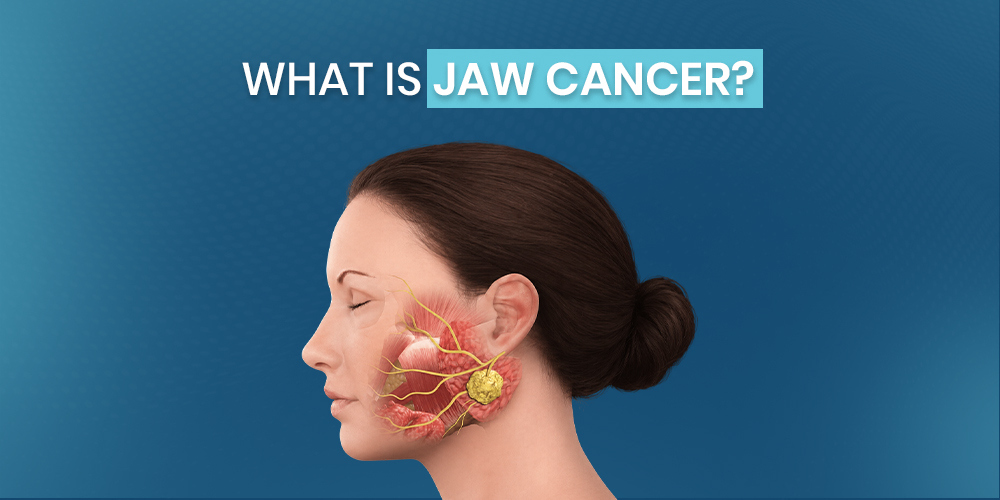
Jaw cancer refers to cancer that develops in the upper jaw (maxilla), lower jaw (mandible), or surrounding tissues. It may begin directly in the jaw bone, known as jaw bone cancer, or spread from nearby structures such as the gums, tongue, salivary glands, or other areas of the mouth.
Although jaw cancer is uncommon, it is often associated with Oral Cancer and other Types of oral cancer. Early detection significantly improves treatment success and helps preserve jaw function.
How Common Is Jaw Cancer?
One of the most common questions patients ask is how common is jaw cancer. It is considered rare compared to other head and neck cancers. Most cancers involving the jaw originate in nearby oral tissues before invading the jawbone. Primary jaw bone cancer accounts for only a small percentage of cancers affecting the mouth and facial bones.
Despite its rarity, individuals with significant tobacco or alcohol use, HPV-related cancers, or previous oral cancers should remain vigilant about persistent jaw symptoms.
What Causes Jaw Cancer?
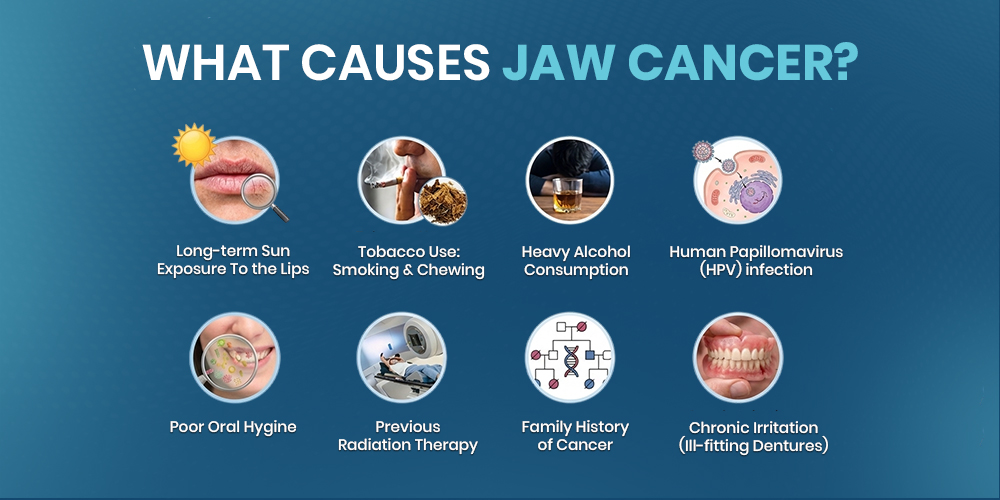
Several factors can increase the risk of developing jaw tumor or jaw cancer. These include:
- Tobacco smoking or chewing tobacco
- Heavy alcohol consumption
- Human papillomavirus (HPV) infection
- Long-term sun exposure affecting the lips
- Poor oral hygiene
- Previous radiation therapy to the head and neck
- Family history of certain cancers
- Chronic irritation from ill-fitting dentures (though irritation alone does not directly cause cancer)
In many cases, jaw cancer develops after cancers from surrounding tissues spread into the jawbone.
Jaw Cancer Symptoms
Recognizing jaw cancer symptoms early can lead to faster diagnosis and better treatment outcomes. Common symptoms of jaw cancer include:
- Persistent pain in the jaw
- Difficulty chewing
- Pain while swallowing
- Loose teeth without obvious dental disease
- Numbness in the chin or lower lip
- Difficulty opening the mouth
- Unexplained bleeding in the mouth
- Non-healing mouth sores
- Facial swelling
- Changes in speech
Many people mistake these symptoms for dental infections or temporomandibular joint (TMJ) disorders, delaying proper diagnosis.
Swollen Jaw Cancer: When Swelling Shouldn’t Be Ignored
A swollen jaw cancer presentation usually develops when a growing tumor affects nearby tissues or the jawbone itself.
Jaw swelling that should prompt medical evaluation includes:
- Swelling lasting more than two weeks
- Progressive facial enlargement
- Painful swelling without infection
- Swelling accompanied by numbness
- Swelling with unexplained weight loss
- Swelling associated with enlarged neck lymph nodes
Persistent swelling deserves evaluation by a dentist, oral surgeon, or head and neck specialist.
Lump in Jaw: Could It Be Cancer?
Finding a lump in jaw can understandably cause concern. While many jaw lumps are benign cysts or enlarged lymph nodes, a persistent lump should never be ignored.
Warning signs include:
- Firm, painless lump
- Rapid growth
- Fixed rather than movable lump
- Associated numbness
- Difficulty chewing
- Persistent jaw pain
Imaging studies and a biopsy are often needed to determine whether the lump is cancerous.
Clicking Jaw Cancer: Is There a Connection?
Many people search for clicking jaw cancer because jaw clicking can be concerning. Fortunately, jaw clicking alone is rarely a sign of cancer. Most cases result from TMJ disorders, arthritis, or muscle dysfunction.
However, if jaw clicking occurs alongside symptoms such as:
- Persistent swelling
- Jaw pain
- Difficulty opening the mouth
- A growing mass
- Numbness
- Loose teeth
A medical evaluation is recommended to rule out more serious conditions.
Signs of Jaw Cancer That Require Immediate Medical Attention
Some signs of jaw cancer should never be ignored. Seek prompt evaluation if you experience:
- Mouth sores lasting more than two weeks
- Persistent jaw pain
- Facial numbness
- Difficulty swallowing
- Bleeding without injury
- Loose teeth
- Persistent bad breath despite good oral hygiene
- Difficulty moving the jaw
- Enlarged neck lymph nodes
Early diagnosis often allows for more effective treatment.
Is Jaw Cancer Curable?
One of the most frequently asked questions is is jaw cancer curable. The answer depends on several factors, including:
- Stage at diagnosis
- Tumor size
- Cancer type
- Whether lymph nodes are involved
- Overall health
When diagnosed early, many cases can be successfully treated using surgery, radiation therapy, chemotherapy, targeted therapy, or combinations of these approaches. Even advanced cases may be managed with treatments designed to control disease progression, reduce symptoms, and improve quality of life.
Diagnosing Jaw Cancer
Doctors typically use several tests to diagnose jaw cancer. These may include:
- Physical examination
- Dental examination
- CT scan
- MRI
- PET scan
- X-rays
- Biopsy
- Blood tests
The biopsy remains the gold standard for confirming cancer.
Jaw Cancer Treatment
Jaw cancer treatment depends on the stage and location of the disease. Treatment options may include:
Surgery: The primary treatment for many jaw cancers involves removing the tumor along with a margin of healthy tissue. In some cases, reconstruction using bone grafts or implants helps restore appearance and function.
Radiation Therapy: Radiation may be used:
- Before surgery
- After surgery
- As the primary treatment when surgery isn’t possible
Chemotherapy: Chemotherapy is often combined with radiation for advanced disease or when cancer has spread.
Targeted Therapy: Some patients benefit from targeted medications that specifically attack cancer cells while minimizing damage to healthy tissues.
Immunotherapy: For certain advanced cancers, immunotherapy helps the immune system recognize and destroy cancer cells.
Jaw Cancer Survival Rate
Patients diagnosed during the earliest stages generally have significantly better outcomes than those diagnosed after the cancer has spread to lymph nodes or distant organs.
Regular follow-up appointments are essential after treatment to monitor for recurrence.
Jaw Cancer and Other Oral Cancers
Jaw cancer often overlaps with other cancers affecting the mouth and throat. These include:
Oral Cancer:
Oral Cancer is a broad term describing cancers that develop anywhere in the mouth, including the lips, gums, tongue, palate, floor of the mouth, and inner cheeks. Some oral cancers can eventually invade the jawbone if left untreated.
Types of Oral Cancer:
The most common Types of oral cancer include cancers affecting the tongue, gums, floor of the mouth, palate, buccal mucosa, and salivary glands. While they arise in different locations, they may share similar symptoms such as persistent sores, pain, or swelling.
Gum Cancer:
Gum cancer often begins as a sore, thickened area, or swelling along the gums. If it progresses, it can spread into the jawbone, making early diagnosis especially important.
Tongue Cancer:
Tongue cancer may cause a persistent ulcer, pain, or difficulty speaking and swallowing. Advanced cases can extend into nearby jaw structures.
Palate Cancer:
Palate cancer affects the roof of the mouth and may present with ulcers, bleeding, or difficulty swallowing. It can also spread to surrounding tissues.
Floor of Mouth Cancer:
Cancer involving the Floor of mouth develops beneath the tongue. Early symptoms often include a sore, lump, or discomfort that does not heal.
Buccal Mucosa (Inner Cheeks Cancer):
Buccal mucosa (Inner cheeks cancer) develops in the lining of the cheeks. Patients may notice ulcers, thickened patches, or difficulty chewing.
Salivary Gland Cancer:
Salivary Gland Cancer affects the glands that produce saliva. Depending on the gland involved, symptoms may include facial swelling, numbness, or a painless lump near the jaw.
Tonsil Cancer:
Tonsil cancer commonly presents with persistent sore throat, difficulty swallowing, ear pain, or enlarged lymph nodes. Advanced disease can involve nearby jaw structures.
Oropharyngeal Cancer:
Oropharyngeal cancer affects the middle part of the throat behind the mouth, including the tonsils and base of the tongue. HPV infection is a major risk factor.
Throat Cancer:
Throat cancer can produce symptoms such as hoarseness, swallowing difficulties, persistent cough, or neck masses. Depending on the location, it may spread to nearby tissues, including the jaw.
Clinical Trials for Jaw Cancer
Clinical trials play an important role in advancing the understanding and treatment of jaw cancer and other head and neck cancers. For some individuals, Head and Neck Cancer Clinical Trials may provide access to investigational therapies that are not yet widely available.
However, participation is voluntary, and not every trial is suitable for every patient. Eligibility depends on factors such as the type and stage of cancer, previous treatments, and overall health.
Similarly, Clinical Trials for Oncology are conducted across many cancer types to study new medications, targeted therapies, immunotherapies, and treatment strategies. The goal is to determine whether these approaches are safe and effective compared with current standards of care.
Patients interested in research opportunities can also explore Clinical Research Studies, where ongoing studies may be available for eligible participants. If you’re considering a clinical trial, speak with your healthcare team to discuss whether a study may be appropriate for your specific diagnosis and treatment plan.
Conclusion
Jaw cancer is a rare condition, but recognizing the early signs and seeking timely medical evaluation can make a significant difference in treatment outcomes. If you experience persistent jaw pain, swelling, a lump, or other unusual symptoms, don’t ignore them. Early diagnosis, appropriate treatment, and regular follow-up care are key to managing the disease. For eligible patients, clinical trials may also offer opportunities to contribute to research evaluating potential new treatments for jaw cancer and other head and neck cancers.
Frequently Asked Questions
What is the first stage of jaw cancer?
Stage 1 jaw cancer is a small, localized tumor that has not spread to nearby lymph nodes or other parts of the body.
Is cancer in the jaw curable?
Jaw cancer can be curable, especially when diagnosed early and treated promptly with the appropriate therapies.
What is the life expectancy of someone with jaw cancer?
Life expectancy depends on the cancer’s stage, type, and response to treatment, with earlier diagnosis generally leading to better outcomes.