Key Takeaways
- Tonsil cancer is an oropharyngeal cancer that often starts as a sore throat or a neck lump.
- HPV infection and long-term tobacco or alcohol use are the two leading causes of tonsil cancer.
- Early-stage tonsil cancer has a high survival rate, especially when caught before it spreads to nearby lymph nodes.
- Treatment usually combines surgery, radiation, and sometimes chemotherapy.
Introduction
A sore throat that lingers for weeks rarely gets a second thought. However, a neck lump or trouble swallowing paired with that discomfort may signal something more serious. Tonsil cancer is a form of oropharyngeal cancer that grows in your tonsils.
Although it is not common, cases linked to HPV infection have grown steadily over the past two decades. Understanding the early signs of tonsil cancer can change the course of treatment.
This article walks through what causes tonsil cancer, how doctors diagnose it, and what treatment options exist today. Additionally, you will find information on related cancers and how clinical research is shaping new therapies.
What Is Tonsil Cancer?
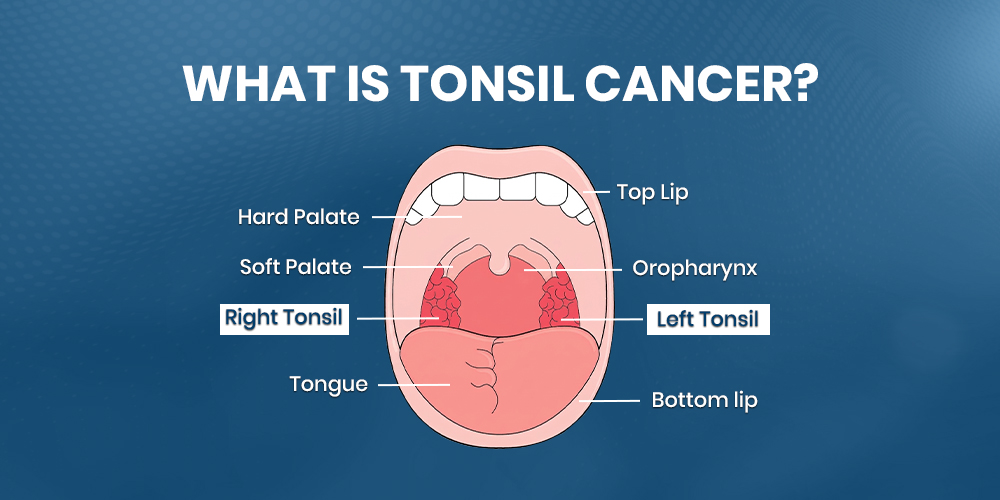
Tonsil cancer begins in the cells of your palatine tonsils. These are two soft pads at the back of your throat. Doctors classify it as a subtype of oropharyngeal cancer, which affects the middle throat. Because the tonsils sit near the tongue base and soft palate, tumors here often affect swallowing and speech. Consequently, many patients first notice changes while eating or talking rather than feeling sharp pain.
How Common Is Tonsil Cancer?
Tonsil cancer remains rare compared to other head and neck cancers. However, the rate has been rising due to HPV. Specifically, HPV-related throat cancer makes up many new oropharyngeal cases in adults under 60.
Men are diagnosed more often than women, and most cases appear after age 50. Still, younger adults with HPV infection are increasingly affected, and this has changed how doctors approach screening.
What Causes Tonsil Cancer?
HPV Infection and Tonsil Cancer
Human papillomavirus, or HPV, is now the leading cause of tonsil cancer in many countries. The virus spreads through intimate contact and can linger in throat tissue for years without symptoms.
Eventually, certain high-risk HPV strains alter cell behavior in the tonsils, leading to tumor growth. Vaccination against HPV has lowered infection rates. However, its effect on throat cancer statistics will take years to show.
Tobacco and Alcohol Use
Smoking and heavy alcohol use remain major risk factors for tonsil cancer and oral cancer more broadly. These substances damage the cells lining your mouth and throat over time.
When tobacco and alcohol use combine, the risk multiplies well beyond either habit alone. Quitting both can lower your risk significantly, even after years of use.
Other Risk Factors
Age, a weakened immune system, and a family history of head and neck cancer also raise your risk. Additionally, poor nutrition and chronic irritation from ill-fitting dentures have been linked to oral cancers in general.
Men face a higher risk than women across nearly every age group. Therefore, regular dental and throat checkups matter more as these risk factors add up.
What Are the Signs and Symptoms of Tonsil Cancer?
Early-Stage Symptoms
First stage tonsil cancer often mimics a common sore throat, which makes early detection tricky. Signs of tonsil cancer at this stage may include:
- A sore throat that does not improve after two to three weeks
- A visible lump or swelling on one tonsil
- Mild pain when swallowing food or liquids
- A persistent feeling that something is stuck in your throat
- Unexplained ear pain on one side
Because these symptoms overlap with minor infections, many people delay seeing a doctor. However, any one-sided or persistent symptom deserves a proper exam. Recognizing tonsil cancer symptoms early matters.
Advanced Symptoms
As tonsil cancer progresses, symptoms tend to become more noticeable and harder to ignore. You may notice unexplained weight loss, a hoarse voice, or a neck lump that does not go away.
Difficulty opening your jaw fully or persistent bad breath can also appear at this stage. Bleeding from the throat is a less common but serious sign. Consequently, doctors recommend prompt evaluation rather than waiting for symptoms to clear on their own.
How Does Tonsil Cancer Compare to Other Oral and Throat Cancers?
Tonsil cancer is one of several cancers that affect the mouth and throat. Related types include tongue cancer, gum cancer, palate cancer, and salivary gland cancer. Each type starts in a different spot and carries its own typical risk factors.
Cancer of the floor of mouth and the buccal mucosa, or inner cheeks, shares causes with tonsil cancer. Both often link to tobacco and alcohol use. Meanwhile, jaw cancer behaves differently and often links to other underlying conditions. The table below outlines key differences across these oral cancer types.
| Cancer Type | Common Location | Leading Risk Factor | Typical First Symptom |
|---|---|---|---|
| Tonsil cancer | Back of throat | HPV infection | Persistent sore throat |
| Tongue cancer | Tongue surface or base | Tobacco and alcohol | Sore that does not heal |
| Gum cancer | Gum tissue | Tobacco use | Swelling or bleeding gums |
| Palate cancer | Roof of mouth | Tobacco and alcohol | Painless white or red patch |
| Salivary gland cancer | Salivary glands | Radiation exposure | Lump near jaw or mouth |
How Is Tonsil Cancer Diagnosed?
Physical Exam and Imaging
Diagnosis usually starts with a physical exam of your mouth, throat, and neck lymph nodes. Doctors often follow this with imaging tests such as a CT scan, MRI, or PET scan.
These scans help reveal tumor size and whether cancer has spread to nearby tissue. Additionally, doctors may use an endoscope to get a closer look at the tonsil area.
Biopsy and Staging
A biopsy remains the only way to confirm a tonsil cancer diagnosis with certainty. During this procedure, doctors remove a small tissue sample for lab testing under a microscope. Once confirmed, the cancer gets staged from one to four based on size and spread. Staging guides every decision that follows, from treatment choice to expected outcomes.
Is Tonsil Cancer Curable? What Is the Survival Rate?
Survival Rates by Stage
The tonsil cancer survival rate depends heavily on the stage at diagnosis and whether HPV is involved. Generally, HPV-positive tonsil cancer responds better to treatment than HPV-negative cases. Five-year survival rates for early-stage disease often exceed 80 percent in many studies. In contrast, survival rates decline once the cancer spreads to distant organs.
Factors That Affect Prognosis
Many people wonder, is tonsil cancer deadly? Several factors shape the answer, including tumor size and lymph node involvement. Smoking during treatment can lower your chances of a full recovery.
Younger patients and those with HPV-related tumors often see better outcomes. Therefore, whether tonsil cancer is curable becomes a question best answered by your care team.
What Are the Treatment Options for Tonsil Cancer?
Surgery
Surgery removes the tumor and, when needed, nearby lymph nodes that show signs of cancer. Robotic and minimally invasive techniques have made recovery faster for many patients. Surgeons aim to preserve as much normal speech and swallowing function as possible. Recovery time varies, though most people return to normal activities within several weeks.
Radiation and Chemotherapy
Radiation therapy targets cancer cells with focused energy beams over several weeks. Chemotherapy often gets added for more advanced cases or when cancer has spread beyond the tonsil.
Combining both treatments, known as chemoradiation, has become a standard tonsil cancer treatment approach. Side effects can include fatigue, dry mouth, and difficulty swallowing during treatment.
Clinical Trials for New Treatments
Clinical trials continue to test new drugs, immunotherapy combinations, and targeted treatments for tonsil cancer. Head and neck cancer clinical trials often focus on reducing side effects while improving long-term outcomes.
Patients interested in clinical trials for oncology may find options not yet available through standard care. NHO Revive supports clinical research studies in Nebraska that explore newer approaches.
Living With Tonsil Cancer
A tonsil cancer diagnosis brings real challenges. Still, many patients go on to live full, active lives after treatment. Speech therapy and nutritional support often help during recovery. Regular follow-up visits allow your care team to catch any changes early. Keep in touch with your healthcare team throughout treatment, since early action consistently leads to better results.
Final Thoughts
Tonsil cancer often starts quietly, disguised as a sore throat that refuses to go away. However, recognizing the early signs of tonsil cancer and acting quickly can change the course of treatment. From HPV vaccination to advances in chemoradiation, research keeps improving outcomes for patients at every stage.
If you or someone you know has been diagnosed, talking with a specialist about available options matters. NHO Revive currently supports clinical research studies in Nebraska focused on head and neck cancer treatment. Consider asking your care team whether a clinical trial might fit your situation.
Frequently Asked Questions
How rare is tonsil cancer?
Tonsil cancer is uncommon overall, though HPV-related cases have risen in recent years, especially among men over 50.
What are the signs of tonsil cancer?
Common signs include a persistent sore throat, a neck lump, ear pain, and swallowing trouble lasting weeks.
Does tonsil cancer spread fast?
Growth speed varies by case. However, HPV-negative tumors tend to spread faster than HPV-positive ones. Early diagnosis matters either way.
Is tonsil cancer curable?
Many cases, especially early-stage and HPV-positive tumors, respond well to treatment and carry favorable long-term outcomes.
What is the survival rate for tonsil cancer?
Five-year survival rates often exceed 80 percent for early-stage disease. However, rates vary based on staging and HPV status.