Key Takeaways
- Soft palate cancer is a rare form of oral cancer that develops in the back part of the roof of the mouth and can affect speaking and swallowing.
- Early symptoms are often mild and may include soft palate pain, a bump on the soft palate, mouth sores, or a lump on the roof of the mouth.
- Major risk factors include smoking, alcohol use, HPV infection, poor oral hygiene, and age.
- Doctors diagnose it using physical exams, biopsy, imaging tests, and sometimes endoscopy to check how far it has spread.
- Treatment options depend on the stage and may include surgery, radiation therapy, chemotherapy, targeted therapy, or immunotherapy.
- Early detection plays a key role in improving treatment success and survival outcomes.
- Healthy lifestyle choices and regular dental checkups can help reduce the risk of developing oral cancers.
Soft palate cancer is a rare type of oral cancer that develops in the soft palate, the muscular part located at the back of the roof of the mouth. This area plays an important role in speaking, swallowing, and separating the mouth from the nasal cavity. Because the symptoms can appear mild in the early stages, many people may ignore them until the condition becomes more serious.
Understanding the signs of soft palate cancer, its causes, and available treatment options can help with early diagnosis and better outcomes. Like many forms of head and neck cancer, early detection greatly improves treatment success and quality of life.
What is the Soft Palate?
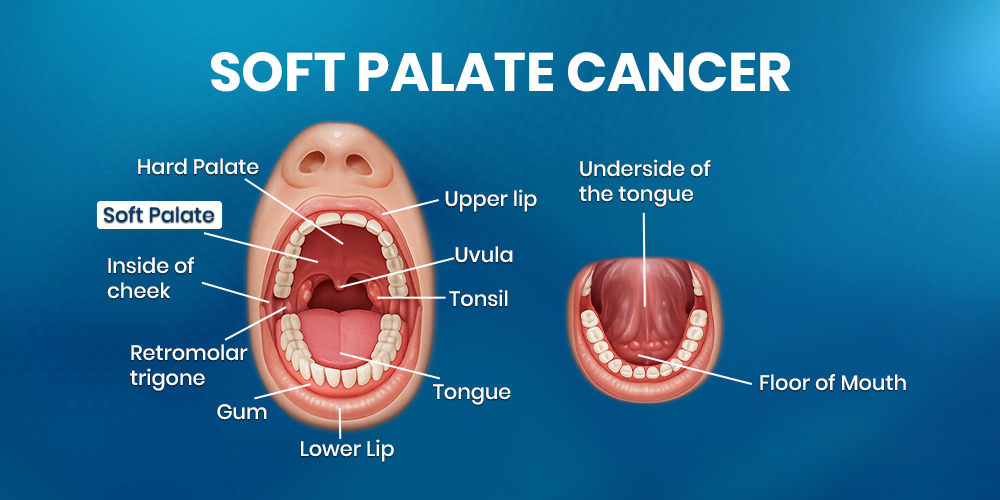
The soft palate is the muscular, flexible part of the palate located at the back of the roof of the mouth. It forms the posterior portion of the palate and separates the oral cavity from the nasal cavity during swallowing and speech.
Understanding the difference between the hard palate vs soft palate is important because both are parts of the palate but have different structures and functions.
- Hard palate: The bony, anterior part of the palate that forms the front portion of the roof of the mouth
- Soft palate: The muscular, posterior part of the palate located at the back of the roof of the mouth
Because the soft palate is closely connected to the oropharynx (throat region), infections or abnormal growths in this area should be evaluated early, as they may affect surrounding structures if left untreated.
What is Soft Palate Cancer?
Soft palate cancer is a rare type of oral cavity or oropharyngeal cancer. It happens when squamous cells multiply abnormally and create cancerous tumors in the mouth and throat.
The cancer on the soft palate accounts for 5% to 12% of all oropharyngeal cancers in the US and may appear as:
- A sore that does not heal
- A bump on the soft palate
- White or red patches
- Thickened tissue inside the mouth
- An ulcer or a persistent mouth tumor
In some cases, the disease can spread to the floor of the mouth, nearby tissues, lymph nodes, or other parts of the body if not treated early.
Soft Palate Cancer Symptoms
The symptoms of soft palate cancer can vary depending on the size and location of the tumor. Early signs are often mild, which is why many patients delay seeking medical attention.
Common symptoms include:
- Persistent soft palate pain
- A lump on the roof of the mouth
- Bump on the soft palate
- Difficulty swallowing
- Pain while eating or drinking
- A sore that does not heal
- Chronic sore throat
- Ear pain
- Bleeding inside the mouth
- Bad breath
- White or red patches
- Voice changes
- Swollen lymph nodes in the neck
- Unexplained weight loss
If any of these symptoms continue for more than two weeks, it is important to consult a healthcare provider.
What Causes Soft Palate Cancer?
There is no single cause of soft palate cancer, but several risk factors can increase the likelihood of developing the disease.
Tobacco Use
Smoking cigarettes, cigars, or using chewing tobacco is one of the biggest risk factors for oral cancers.
Alcohol Consumption
Heavy alcohol use can damage oral tissues and increase cancer risk, especially when combined with tobacco.
HPV Infection
Human papillomavirus (HPV), particularly HPV-16, is strongly linked to many oropharyngeal cancers. HPV-related cancers have increased steadily over the last two decades.
Poor Oral Hygiene
Chronic irritation, untreated dental problems, and poor oral care may contribute to oral cancer development.
Age
Most oral cancers are diagnosed in adults over the age of 55, although younger people can also be affected.
Weak Immune System
Individuals with weakened immunity may have a higher cancer risk.
Nutritional Deficiencies
Poor diet lacking fruits and vegetables may increase oral cancer risk over time.
How Is Soft Palate Cancer Diagnosed?
Doctors use several tests to diagnose cancer on the soft palate.
Physical Examination
The doctor checks the mouth, throat, and neck for abnormal tissue or swollen lymph nodes.
Biopsy
A small tissue sample is removed and examined under a microscope to confirm cancer.
Imaging Tests
CT scans, MRI scans, or PET scans help determine the size and spread of the tumor.
Endoscopy
A thin camera may be used to examine deeper areas of the throat.
Soft Palate Cancer Staging
Healthcare providers use the TNM staging system to determine how far soft palate cancer has spread. TNM stands for:
- T (Tumor): Size and extent of the main tumor
- N (Nodes): Whether cancer has spread to nearby lymph nodes
- M (Metastasis): Whether cancer has spread to distant organs
Stage 1
The tumor is small and limited to the soft palate without lymph node involvement or distant spread.
Stage 2
The tumor becomes larger but still remains localized to nearby tissues.
Stage 3
Cancer may be larger or may have spread to a nearby lymph node in the neck.
Stage 4
This is advanced cancer. The tumor may spread into nearby structures such as the throat, tongue, or jaw, or spread to distant organs like the lungs.
Treatment Options for Soft Palate Cancer
Treatment for soft palate cancer depends on the stage, size of the tumor, and whether it has spread.
- Surgery: Removes the tumor, and may include removal of nearby lymph nodes (neck dissection). Minimally invasive techniques like TORS may be used.
- Radiation therapy: Uses high-energy rays to destroy cancer cells, often for localized or advanced disease.
- Chemotherapy: Used when cancer has spread or in more advanced cases.
- Chemoradiation: Combines chemotherapy and radiation, usually for lymph node involvement.
- Reconstruction: A soft palate obturator or reconstructive surgery may help restore speech and swallowing.
Possible Treatment Effects
Because the soft palate is essential for speech and swallowing, treatment may temporarily or permanently affect these functions, depending on the extent of surgery or radiation.
Soft Palate Cancer Survival Rate
The survival rate for soft palate (oropharyngeal) cancer varies widely depending on the stage at diagnosis, HPV status, tumor size, and overall health of the patient.
In general, early-stage or localized oropharyngeal cancers have a much higher 5-year survival rate (around 80% or more), while advanced or metastatic disease has significantly lower survival outcomes.
Patients with HPV-positive tumors typically have a better response to treatment and improved survival compared to HPV-negative cases.
Overall, prognosis is strongly influenced by early detection, which is why timely evaluation of symptoms such as persistent soft palate pain, non-healing sores, or a lump on the roof of the mouth is very important.
Can Soft Palate Cancer Be Prevented?
Although not every case can be prevented, risk can be reduced by:
- Avoiding tobacco products
- Limiting alcohol consumption
- Getting the HPV vaccine
- Maintaining good oral hygiene
- Eating a healthy diet
- Visiting the dentist regularly
Early oral examinations can sometimes detect abnormal tissue before cancer becomes advanced.
When Should You See a Doctor?
Seek medical evaluation if you notice:
- A persistent lump on the roof of your mouth
- Soft palate pain lasting more than two weeks
- Difficulty swallowing
- Ongoing mouth sores
- Bleeding from the mouth
- Unexplained throat pain
Ignoring symptoms can delay diagnosis and reduce treatment success.
Other Types of Oral Cancer
Oral cancer does not only affect the palate. It can also develop in other parts of the mouth and throat. Some common types include:
- Tongue Cancer
- Lip Cancer
- Gum Cancer
- Throat Cancer
- Palate Cancer (Roof of the Mouth)
- Cancer on the Floor of the Mouth
- Buccal Mucosa (Inner Cheeks Cancer)
- Tonsil Cancer
- Jaw Cancer
Some oral cancers may also affect nearby salivary structures such as the submandibular gland. Certain patients may also develop salivary gland cancer or a parotid gland tumor, depending on the location of abnormal tissue growth.
The Role of Clinical Trials in Cancer Care
Clinical trials continue to improve treatment options for oral and head and neck cancers. Researchers study new therapies, targeted medications, immunotherapies, and improved radiation techniques.
Patients diagnosed with oral cancers may consider participating in head and neck cancer clinical trials to access investigational treatments and contribute to future medical advancements.
For patients and families seeking research opportunities, clinical research studies in Nebraska may provide access to ongoing cancer-related studies and specialized care programs.
Final Thoughts
Soft palate cancer is a serious but potentially treatable condition when identified early. Symptoms such as persistent pain, swallowing difficulties, or a lump on the roof of the mouth should never be ignored.
Regular dental visits, avoiding tobacco, limiting alcohol use, and seeking medical attention for persistent mouth changes are important steps toward early diagnosis and better outcomes.
Moreover, advances in cancer research, including targeted therapies and clinical trials for oncology, continue to improve treatment possibilities for patients affected by oral and head and neck cancers.
Frequently Asked Questions
What are the early signs of soft palate cancer?
Early signs may include soft palate pain, a bump on the soft palate, mouth sores that do not heal, difficulty swallowing, and persistent sore throat.
Is a bump on the soft palate always cancerous?
No, a bump on the soft palate can also result from infections, cysts, ulcers, or irritation. However, any persistent lump should be checked by a doctor.
What causes soft palate cancer?
Common soft palate cancer causes include tobacco use, heavy alcohol consumption, HPV infection, poor oral hygiene, and long-term irritation.
What is the survival rate for soft palate cancer?
The soft palate cancer survival rate depends on the stage of diagnosis, overall health, and treatment response. Early detection often improves outcomes.
How is soft palate cancer treated?
Treatment may include surgery, radiation therapy, chemotherapy, targeted therapy, or immunotherapy, depending on the cancer stage and severity.