

Quick Answer
A diagnosis of bladder cancer can raise immediate questions about treatment, prognosis, and the future. While survival statistics can provide useful context, they do not predict exactly what will happen to one individual.
A person’s outlook can depend on several factors, including the type and grade of bladder cancer, whether it has invaded the bladder muscle, whether it has spread to nearby lymph nodes or distant organs, overall health, and how the cancer responds to treatment.
Key Takeaways
- The Bladder Cancer Survival Rate varies based on how far the cancer has spread when it is diagnosed.
- Current U.S. data report 5-year relative survival rates ranging from 9% for distant disease to 73% for localized disease.
- Stage and grade are important factors when assessing bladder cancer prognosis.
- Blood in the urine is a common warning sign, but urinary symptoms can have several causes.
- Treatment options depend on the individual’s cancer and may include surgery, chemotherapy, radiation, immunotherapy, targeted therapy, or clinical trials.
- Clinical research continues to evaluate new approaches for bladder cancer.
What Is the Bladder Cancer Survival Rate?
The Bladder Cancer Survival Rate generally refers to the percentage of people with bladder cancer who are alive a certain number of years after diagnosis. A commonly used measure is the 5-year relative survival rate.
According to the American Cancer Society’s 2026 data, the 5-year relative survival rates for bladder cancer vary substantially depending on how far the cancer has spread at diagnosis:
| Extent of bladder cancer | 5-year relative survival |
|---|---|
| Localized | 73% |
| Regional | 41% |
| Distant | 9% |
| All SEER stages combined | 79% |
These figures are population-level estimates, not predictions for an individual patient.
What Factors Affect Bladder Cancer Prognosis?
Bladder cancer prognosis can differ considerably between patients. Stage is one of the most important factors because it describes how far the cancer has grown or spread.
Other factors may include:
- Cancer stage: Early-stage bladder cancer has not spread as far as advanced disease.
- Tumor grade: Grade describes how abnormal the cancer cells look and can provide information about how the cancer may behave.
- Muscle involvement: Cancer that has invaded the muscle layer of the bladder is considered muscle-invasive and may require different treatment approaches.
- Spread to other areas: Cancer that has reached lymph nodes or distant organs generally presents a more complex treatment situation.
- Overall health: Age, general health, and other medical conditions may influence treatment decisions.
- Response to treatment: How a tumor responds to treatment can affect the outlook over time.
Because these factors vary from person to person, survival statistics should be discussed with an oncologist or other qualified healthcare professional rather than used as a personal prediction.
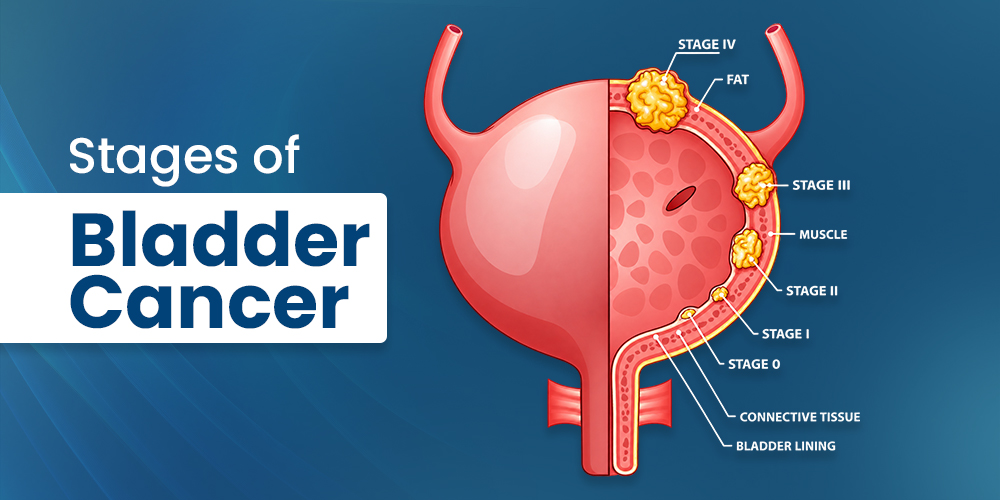
Understanding Bladder Cancer Stages
When people search for bladder cancer stages, they are often trying to understand what their diagnosis means and how serious it may be.
Bladder cancer is commonly staged using the TNM system. Broadly, stages can be described as:
- Stage 0: Cancer cells are limited to the inner lining of the bladder and have not invaded the bladder wall.
- Stage I: Cancer has grown into connective tissue beneath the bladder lining but has not reached the muscle.
- Stage II: Cancer has invaded the muscle layer of the bladder.
- Stage III: Cancer has extended through the bladder or reached certain nearby lymph nodes or reproductive organs.
- Stage IV: Cancer has spread to more distant lymph nodes, organs, bones, or other parts of the body.
The exact meaning of each stage is more detailed than these general descriptions. Doctors use staging information, pathology results, imaging, and other findings to develop an appropriate treatment plan.
For patients trying to understand how is bladder cancer diagnosed, evaluation may include medical and family history, urine testing, physical examination, cystoscopy, urine tumor-marker testing, and other tests when appropriate. Additional testing may be used to determine the extent of the disease after diagnosis.
What Are the Warning Signs of Bladder Cancer?
Someone searching how i knew i had bladder cancer may be trying to understand which early symptoms prompted other patients to seek medical attention.
The experience varies, but the most common warning sign is blood in the urine, known as hematuria. It may be visible or detectable only through urine testing.
Other possible symptoms include:
- Frequent urination
- Pain or burning during urination
- Feeling an urgent need to urinate
- Frequent nighttime urination
- Lower back or abdominal pain in some cases
These symptoms can also occur with urinary tract infections, kidney stones, and other conditions. Blood in the urine should not be ignored, even if it occurs only once or disappears. A healthcare professional can determine whether further evaluation is needed.
This is why asking only, “How serious is bladder cancer?” may not provide enough information. A more useful discussion involves understanding the symptoms, specific stage, grade, tumor characteristics, and treatment options associated with an individual’s diagnosis.
What Does Bladder Cancer Life Expectancy Mean?
Bladder cancer life expectancy refers to how long a person may live following diagnosis. However, there is no single life-expectancy figure that applies to everyone.
A person diagnosed with early-stage, non-muscle-invasive cancer may have a different outlook from someone whose cancer has spread to distant organs. Age, overall health, tumor characteristics, available treatments, and treatment response can also affect individual outcomes.
Survival statistics are useful for understanding general patterns, but they cannot account for every person’s circumstances. Patients can ask their healthcare team how their stage and grade affect their outlook, which treatments are appropriate, and what follow-up care may be needed.
How Clinical Research May Shape the Future of Bladder Cancer Treatment
Research continues to investigate new approaches for bladder cancer. Current studies include research involving immunotherapy, targeted therapies, combination treatments, biomarkers, and approaches for both non-muscle-invasive and advanced disease.
The National Cancer Institute currently lists numerous bladder cancer clinical trials investigating different treatment approaches and research questions. Eligibility varies according to factors such as cancer type, stage, previous treatment, age, and other study requirements.
A clinical research organization can support the operational work required to conduct clinical studies, including study coordination, participant engagement, data collection, and adherence to research requirements.
Why Diversity in Clinical Trials Matters?
Diversity in Clinical trials is also important when researchers are working to understand how treatments perform across different populations.
When clinical research includes people from varied backgrounds and communities, researchers can gather evidence from a broader range of participants. Participation is always voluntary, and eligibility requirements are determined by each individual study.
For patients interested in research, Bladder Cancer Clinical Trials may provide another avenue to discuss with their healthcare provider.
Bladder Cancer Research at NHO Revive
Research sites such as NHO Revive contribute to ongoing oncology research. NHO Revive is a collaboration between Nebraska Hematology Oncology and Revive focused on conducting clinical research in hematology and oncology.
Research availability and eligibility can change, so patients should review the current study information and speak with the research team to determine whether a particular study may be appropriate.
Final Thoughts
The Bladder Cancer Survival Rate offers a useful overview of outcomes across different groups, but an individual’s prognosis depends on factors such as cancer stage, tumor grade, overall health, and response to treatment. Understanding bladder cancer life expectancy, recognizing warning signs, and learning about diagnostic and treatment options can help patients prepare for informed discussions with their healthcare team.
Clinical research also continues to investigate new approaches to bladder cancer care. For eligible patients, clinical trials may provide an opportunity to consider investigational treatments while contributing to medical knowledge. The most appropriate next step is to seek individualized medical guidance and explore available care and research options.
Frequently Asked Questions
How aggressive is bladder cancer?
Bladder cancer can range from slower-growing tumors that remain in the bladder lining to aggressive cancers that invade the muscle or spread to other organs. Stage and grade help doctors determine how the disease may behave and which treatment options may be appropriate.
What are the warning signs of bladder cancer?
Blood in the urine is the most common warning sign. Other symptoms may include frequent urination, urinary urgency, and pain or burning during urination.
Is bladder cancer curable?
Some bladder cancers, particularly certain non-muscle-invasive forms, can often be cured with appropriate treatment. The likelihood of successful treatment depends on the cancer’s stage, grade, and other individual factors. An oncologist can explain the options for a specific diagnosis.