Key Takeaways
- Small Cell vs Non Small Cell Lung Cancer refers to the two primary categories of lung cancer.
- SCLC generally grows and spreads more rapidly than NSCLC.
- NSCLC is more common and includes adenocarcinoma, squamous cell carcinoma, and large cell carcinoma.
- SCLC is commonly classified as limited-stage or extensive-stage disease, while NSCLC is generally staged from I to IV.
- Treatment depends on cancer type, stage, tumor characteristics, biomarkers, and overall health.
Small Cell vs Non-Small Cell Lung Cancer: What Is the Difference?
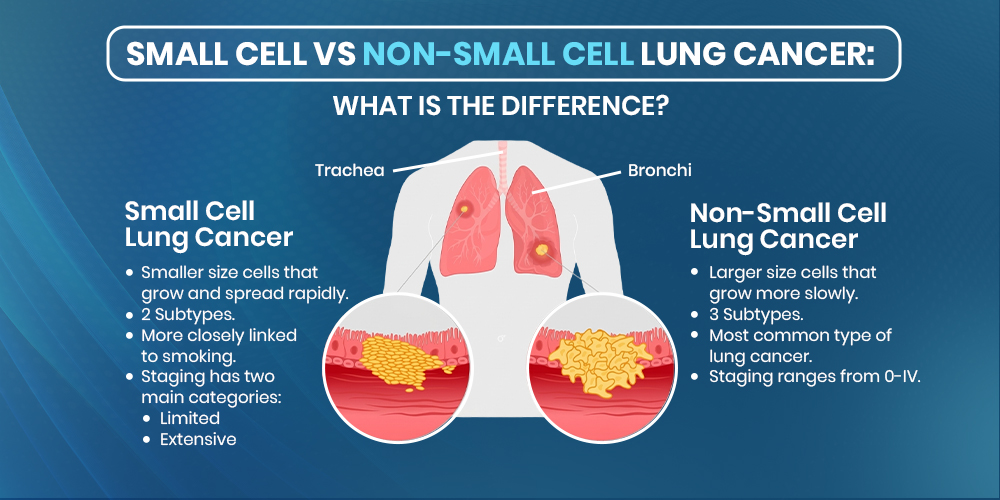
Small Cell vs Non-Small Cell Lung Cancer is an important distinction because these two major categories of Lung Cancer differ in how the cancer cells look under a microscope, how quickly they tend to grow, how they spread, and how they are treated. Small cell lung cancer (SCLC) generally grows and spreads more quickly, while non-small cell lung cancer (NSCLC) is more common and includes several different subtypes.
Understanding the difference between small cell and non-small cell lung cancer can help patients and families understand why doctors may recommend different tests and treatment approaches. However, an individual’s treatment plan depends on factors such as cancer stage, tumor characteristics, overall health, and whether specific biomarkers are present.
What Is Lung Cancer?
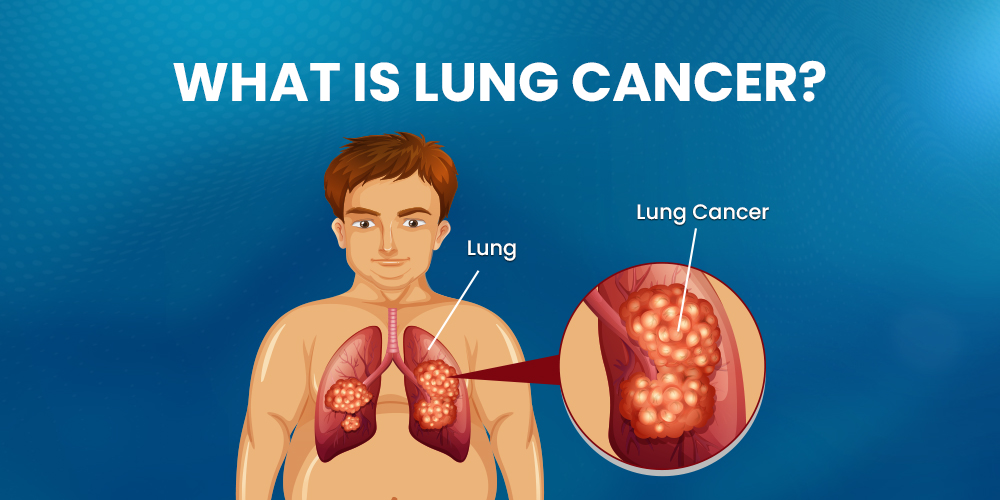
Lung cancer develops when abnormal cells in the lungs grow uncontrollably and form tumors. Cancer cells can potentially spread from the lungs to nearby lymph nodes or distant parts of the body.
Lung cancer is broadly divided into two major categories:
- Small cell lung cancer (SCLC)
- Non-small cell lung cancer (NSCLC)
These categories are based primarily on how the cancer cells appear under a microscope and how they behave. NSCLC accounts for most lung cancer cases, while SCLC represents a smaller proportion.
Although both types can cause similar symptoms, their biology and treatment approaches can be significantly different.
What Is Small Cell Lung Cancer?
Small cell lung cancer is an aggressive type of lung cancer characterized by small cells that can multiply quickly. It is strongly associated with cigarette smoking, although smoking history does not determine an individual’s diagnosis or outcome.
SCLC often begins in the airways of the lungs and may spread to other parts of the body relatively early. Because of this tendency, doctors may use imaging and other tests to determine whether the cancer has spread before selecting treatment.
Common Symptoms of Small Cell Lung Cancer
Symptoms can include:
- Persistent or worsening cough
- Chest discomfort or pain
- Shortness of breath
- Coughing up blood
- Unexplained weight loss
- Fatigue
- Recurrent respiratory infections
- Hoarseness
Some symptoms may occur with other lung conditions, so experiencing one or more of these signs does not necessarily mean someone has cancer. Persistent or concerning symptoms should be evaluated by a healthcare professional.
What Is Non-Small Cell Lung Cancer?
Non-small cell lung cancer is the most common category of lung cancer. It includes several distinct subtypes with different cellular characteristics and treatment considerations.
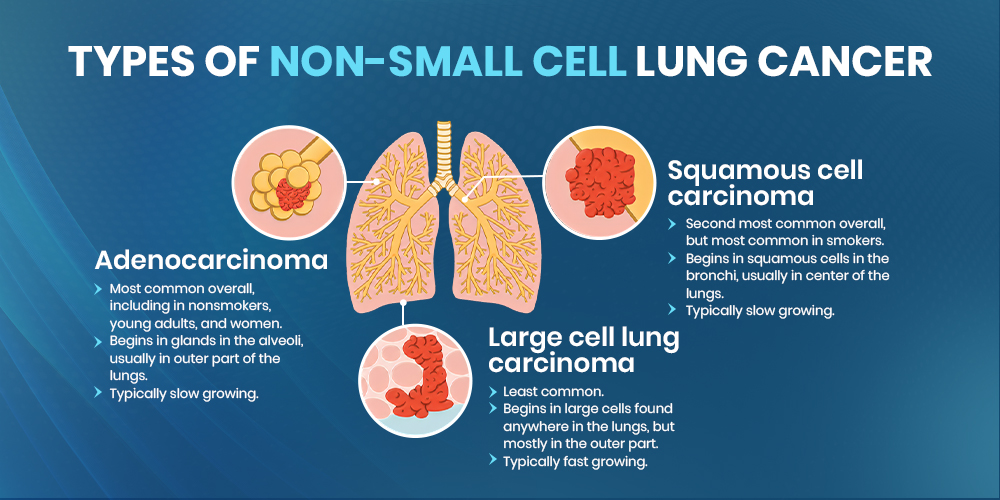
The three major types are:
Adenocarcinoma
Adenocarcinoma develops from cells that produce substances such as mucus. It is the most common type of NSCLC and can occur in people who have never smoked as well as people with a history of smoking.
Squamous Cell Carcinoma
Squamous cell carcinoma begins in squamous cells lining the airways. It has a strong association with smoking and often develops in the central portions of the lungs.
Large Cell Carcinoma
Large cell carcinoma can develop in different parts of the lung and may grow and spread quickly. It is less common than adenocarcinoma and squamous cell carcinoma.
Small Cell vs Non-Small Cell Lung Cancer: Key Differences
When comparing Small Cell vs Non-Small Cell Lung Cancer, several characteristics stand out.
The table provides a general comparison. Individual cancers can behave differently, and treatment decisions should be based on a patient’s specific diagnosis.
Difference Between Small Cell and Non-Small Cell Lung Cancer Staging
Staging determines how extensive the cancer is and helps healthcare professionals develop an appropriate treatment plan.
SCLC is commonly categorized into limited-stage and extensive-stage disease. Limited-stage SCLC generally refers to cancer that is confined to one side of the chest and can be encompassed within a tolerable radiation field. Extensive-stage disease has spread more widely.
NSCLC is generally assigned a TNM stage based on the size and extent of the primary tumor, involvement of lymph nodes, and distant metastasis. It is categorized into stages I through IV.
Because staging can be complex, doctors may use CT scans, PET scans, MRI scans, biopsies, and other tests to determine how far the disease has progressed.
How Are Small Cell and Non-Small Cell Lung Cancer Diagnosed?
Diagnosis typically begins with a medical history and physical examination. Depending on the symptoms and imaging findings, doctors may order imaging studies and obtain a tissue sample through a biopsy.
A pathologist examines the sample to determine whether the cancer is SCLC or NSCLC and, when appropriate, identify its specific subtype.
For many people with NSCLC, biomarker testing can also play an important role. Certain genetic changes or proteins may influence which targeted therapies or immunotherapies could be considered.
How Is Small Cell Lung Cancer Treated?
Treatment for SCLC depends largely on whether the disease is limited or extensive and, on the patient’s, overall health.
Treatment may include:
- Chemotherapy
- Radiation therapy
- Immunotherapy
- Surgery in selected cases
Because SCLC can spread quickly, systemic therapy is an important part of treatment. Radiation may be used alongside systemic treatment or to address areas of disease.
For extensive-stage SCLC, treatment may include chemotherapy combined with immunotherapy, depending on the individual’s circumstances and current treatment recommendations.
How Is Non Small Cell Lung Cancer Treated?
Treatment for NSCLC varies considerably according to stage, subtype, biomarkers, and overall health.
Potential treatments include:
- Surgery
- Radiation therapy
- Chemotherapy
- Targeted therapy
- Immunotherapy
- Combinations of these approaches
For earlier-stage NSCLC, surgery may be an option for some patients. Radiation or systemic therapy may also be used depending on the stage and other characteristics of the cancer.
For advanced NSCLC, molecular and biomarker testing may help identify patients who could benefit from targeted therapies or specific immunotherapy approaches.
Which Is More Aggressive: Small Cell or Non-Small Cell Lung Cancer?
Generally, small cell lung cancer tends to grow and spread more quickly than non-small cell lung cancer. This is one of the major clinical differences between the two categories.
However, “aggressive” does not provide enough information to predict an individual’s outcome. Some NSCLC tumors can also grow rapidly or be diagnosed after they have already spread.
The stage, tumor biology, response to treatment, overall health, and other factors are more useful when discussing an individual patient’s prognosis.
Can Small Cell and Non-Small Cell Lung Cancer Be Prevented?
There is no guaranteed way to prevent every case of lung cancer. However, avoiding tobacco use is one of the most important ways to reduce lung cancer risk. Exposure to second-hand smoke, radon, certain workplace substances, and air pollution can also contribute to risk.
People who currently smoke may benefit from speaking with a healthcare professional about evidence-based smoking cessation support.
Small Cell vs Non-Small Cell Lung Cancer: The Role of Clinical Research
Ongoing oncology clinical research is helping researchers investigate new approaches to diagnosing, treating, and managing lung cancer.
Clinical research may evaluate new medications, treatment combinations, targeted therapies, immunotherapies, biomarkers, or approaches designed to improve patient outcomes. Participation in a study is voluntary, and each trial has specific eligibility requirements.
Patients interested in research opportunities may explore Small Cell Lung Cancer Clinical Trials or Non-Small Cell Lung Cancer Clinical Trials to learn about studies that may be relevant to their diagnosis.
Those looking for research opportunities in the region can also explore clinical research studies in Nebraska and speak with a qualified research team about available studies. Reach out to NHO Revive team for more information about clinical research opportunities and studies for eligible patients.
Why Understanding Your Lung Cancer Type Matters?
Knowing whether a tumor is SCLC or NSCLC is only the first step. Patients may also need to understand the cancer’s stage, subtype, biomarkers, and treatment options.
For NSCLC in particular, biomarker results can influence whether certain targeted treatments are appropriate. For SCLC, the extent of disease and response to treatment are important considerations when developing a treatment plan.
Patients should ask their healthcare team questions such as:
- What type of lung cancer do I have?
- What stage is my cancer?
- Has it spread beyond the lung?
- Has my tumor been tested for relevant biomarkers?
- What treatment options are available?
- Are there clinical trials I may qualify for?
Having clear answers can help patients participate more confidently in discussions about their care.
Final Thoughts
Understanding small cell vs non-small cell lung cancer can help patients better understand why diagnosis, staging, biomarker testing, and treatment recommendations may differ. While SCLC generally grows more quickly, NSCLC includes several subtypes with different biological characteristics and treatment options. The right approach depends on the individual’s specific cancer and overall health.
For patients and families seeking additional options, oncology clinical research studies may provide opportunities to consider investigational treatments.
Frequently Asked Questions
What is the main difference between small cell and non-small cell lung cancer?
The main difference is the type and appearance of cancer cells, along with how the cancer typically grows and spreads. SCLC generally grows and spreads more rapidly, while NSCLC is more common and includes several subtypes.
Which is more common, small cell or non-small cell lung cancer?
Non small cell lung cancer is more common. It accounts for the majority of lung cancer cases.
Is small cell lung cancer more aggressive than non-small cell lung cancer?
Small cell lung cancer tends to grow and spread more quickly than NSCLC. However, individual tumors can behave differently, so prognosis depends on the specific diagnosis and stage.
What are the main types of non-small cell lung cancer?
The major NSCLC subtypes are adenocarcinoma, squamous cell carcinoma, and large cell carcinoma.
Can lung cancer be treated?
Treatment options are available for both SCLC and NSCLC. Depending on the cancer type and stage, treatment may include surgery, radiation, chemotherapy, immunotherapy, targeted therapy, or combinations of these approaches.
Are there clinical trials for small cell lung cancer?
Clinical trials may investigate new treatments or treatment combinations for SCLC. Eligibility varies by study, so patients should discuss potential trials with their healthcare team.