AI Overview:
Small cell lung cancer (SCLC) is a rare, fast-growing type of lung cancer that can spread quickly. Smoking is the main risk factor, although other factors may also increase risk. Common symptoms may include persistent cough, chest pain, shortness of breath, wheezing, and unexplained weight loss. Diagnosis involves imaging and biopsy, and treatment depends on how far the cancer has spread.
Key Takeaways
- Small cell lung cancer (SCLC) is a rare, fast-growing type of lung cancer that can spread quickly.
- Smoking is the main risk factor, although other factors such as second hand smoke, radon, radiation, and workplace exposures may also increase risk.
- Common symptoms may include persistent cough, chest pain, shortness of breath, wheezing, and unexplained weight loss.
- Diagnosis may involve imaging tests, a biopsy, and other laboratory tests to confirm SCLC and determine how far it has spread.
- SCLC can spread through the bloodstream and lymphatic system to areas such as the brain, liver, bones, adrenal glands, and other parts of the lungs.
- Treatment may include chemotherapy, radiation therapy, immunotherapy, and, in rare cases, surgery, depending on the cancer spread and the person’s overall health.
- SCLC is usually not hereditary, and it accounts for about 10% to 15% of all lung cancer cases.
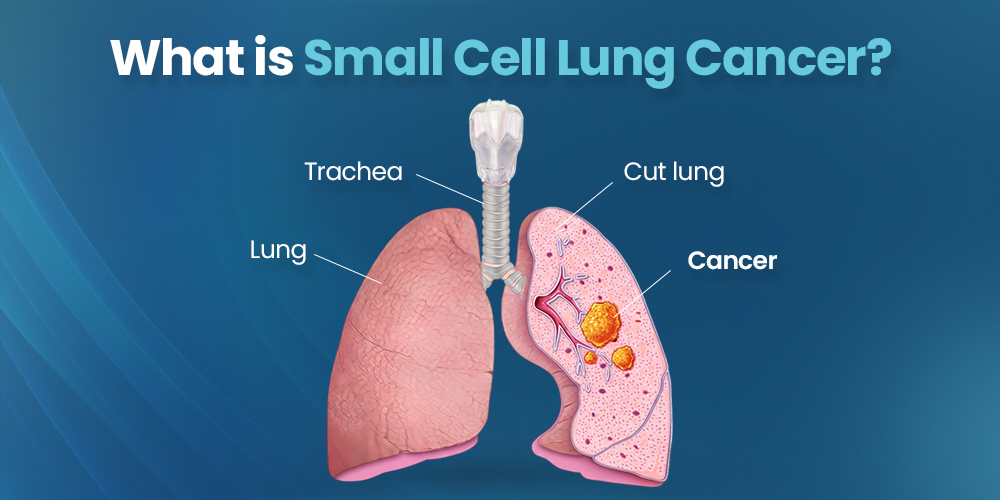
What is Small Cell Lung Cancer?
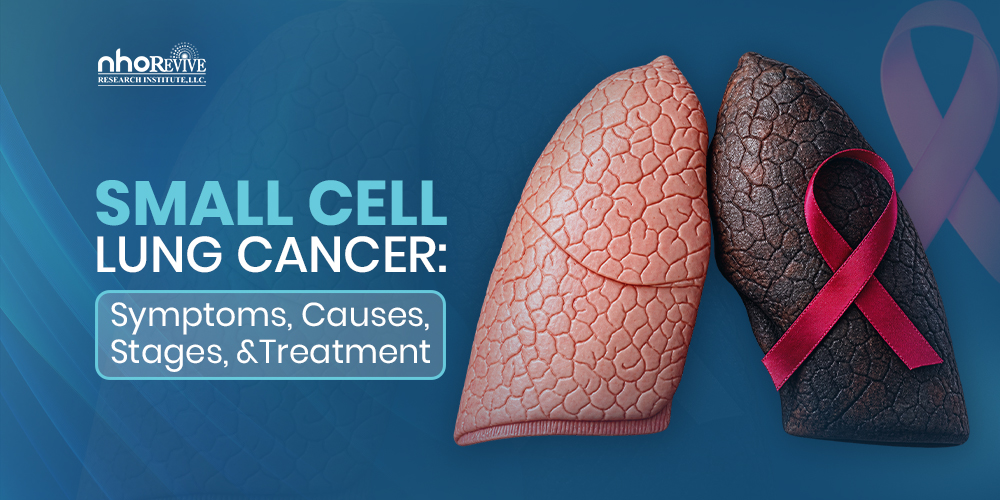
Small cell lung cancer (SCLC), also called small cell carcinoma of the lung, is a rare and fast-growing type of lung cancer. It develops from cells in the lungs and is known for spreading more quickly than many other types of lung cancer. SCLC most often occurs in people with a long history of tobacco use, particularly cigarette smoking.
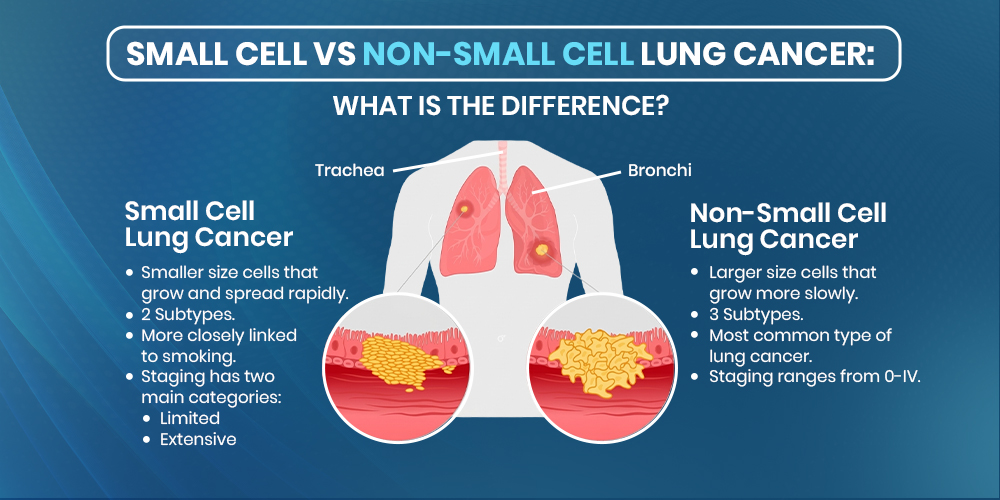
The name small cell lung cancer comes from how the cancer cells appear under a microscope. These cells are smaller than the cancer cells typically seen in non-small cell lung cancer (NSCLC). SCLC may also be called oat cell carcinoma because the cells can have a shape that resembles grains of oats.
SCLC can grow and spread to other parts of the body at an early stage. Healthcare providers generally classify it based on how far the cancer has spread:
- Limited-stage SCLC: The cancer is generally confined to one side of the chest and can be treated within a single radiation field.
- Extensive-stage SCLC: The cancer has spread beyond the limited area, including to distant parts of the body.
There are also two main types of SCLC based on the cancer cells present: small cell carcinoma, which is the most common type, and combined small cell carcinoma, which contains both small cell and non-small cell cancer cells.
Small Cell Vs Non-Small Cell Lung Cancer:
Small cell vs non-small cell lung cancer refers to two main types of lung cancer that differ in how they grow, spread, and respond to treatment.
Small Cell Lung Cancer (SCLC):
Accounts for about 10–15% of lung cancer cases. It tends to grow quickly and can spread to other parts of the body at an early stage.
Non-Small Cell Lung Cancer (NSCLC):
Accounts for about 80–85% of lung cancer cases. It generally grows and spreads more slowly than SCLC and includes several different subtypes.
Is Small Cell Lung Cancer Hereditary?
People often ask, is small cell lung cancer hereditary? SCLC is usually not hereditary. Most cases result from genetic changes that develop during a person’s lifetime, often linked to smoking or other environmental exposures. However, some people may inherit gene changes that increase their risk of developing SCLC.
What Causes Small Cell Lung Cancer?
Small cell lung cancer develops when genetic changes occur in cells in the lungs. These changes can affect genes that normally control how cells grow and divide. As a result, abnormal cells may multiply uncontrollably and form a tumor.
Smoking is the main risk factor for SCLC. People who currently smoke or have smoked in the past have a higher risk of developing the disease. Exposure to second hand smoke can also increase the risk.
Other factors that may contribute to the development of SCLC include:
- Second hand smoke: Regular exposure to smoke from other people’s cigarettes or tobacco products can increase lung cancer risk.
- Previous radiation treatment: Radiation to the chest or other areas may increase the risk of developing lung cancer later in life.
- Radon exposure: Radon is a colorless, radioactive gas that can build up inside homes and other buildings.
- Workplace exposures: Long-term exposure to substances such as asbestos, arsenic, nickel, tar, and certain toxic chemicals may increase lung cancer risk.
- Age: The risk of lung cancer generally increases with age, although SCLC can occur in younger adults.
- Family history: Having a close family member with lung cancer may increase your risk, although this does not mean you will develop the disease.
- Other environmental factors: Air pollution and certain other long-term environmental exposures may also contribute to lung cancer risk.
Having one or more risk factors does not mean you will develop SCLC. Some people with several risk factors never develop lung cancer, while others may develop it without having any known risk factors. If you are concerned about your risk, talk with a healthcare professional about your individual circumstances.
Signs and Symptoms of Small Cell Lung Cancer
Small cell lung cancer can cause symptoms as it grows in the lungs or spreads to other parts of the body. Some symptoms may develop gradually, while others can become more noticeable as the disease progresses. These symptoms can also occur with conditions other than SCLC, so having them does not necessarily mean you have lung cancer.
Common signs and symptoms include:
- Persistent or worsening cough: A cough that does not go away or becomes worse over time.
- Chest pain or discomfort: Pain or pressure in the chest may occur as the tumor affects nearby tissues.
- Shortness of breath: Breathing may become difficult, particularly as the tumor affects the airways or lung function.
- Wheezing: A high-pitched sound when breathing can occur if the airways become narrowed.
- Coughing up blood: Blood may appear in sputum coughed up from the lungs.
- Hoarseness: Changes in the voice may occur when the cancer affects structures or nerves near the lungs.
- Difficulty swallowing: A growing tumor may sometimes put pressure on the esophagus.
- Loss of appetite and unexplained weight loss: These may occur as the disease progresses.
- Fatigue and weakness: Persistent tiredness can accompany cancer and its effects on the body.
- Swelling in the face or neck: SCLC can sometimes affect blood flow through veins in the chest, leading to swelling.
- Recurrent respiratory infections: Lung cancer can sometimes contribute to repeated infections such as pneumonia.
When SCLC spreads beyond the lungs, it may cause additional symptoms depending on which parts of the body are affected. New or persistent symptoms should be evaluated by a healthcare professional.
How Is Small Cell Lung Cancer Diagnosed?
Doctors use several tests to determine whether someone has small cell lung cancer (SCLC). So, if you’re wondering how small cell lung cancer is diagnosed, the process usually begins with a review of symptoms and medical history, followed by imaging and other tests to identify abnormal areas and confirm the diagnosis.
Medical History and Physical Examination
A healthcare provider will ask about symptoms, smoking history, and other factors that may increase the risk of lung cancer. A physical examination may also help identify signs that could be related to a lung problem.
Imaging Tests
Imaging tests help doctors look for abnormal areas in the lungs and determine whether cancer may have spread.
- Chest X-ray: This may be one of the first tests used to look for unusual areas in the lungs.
- CT scan: A CT scan provides more detailed images of the lungs and chest and is commonly used when lung cancer is suspected.
- PET scan: A PET scan can help identify areas of increased activity that may indicate cancer and can help assess whether it has spread.
- MRI: An MRI may be used to examine certain areas of the body, including the brain, when doctors need to check for possible spread.
Biopsy
A biopsy is often needed to confirm SCLC. During this procedure, a healthcare provider removes a small sample of tissue or cells from a suspicious area. A biopsy may be performed using a needle or during a bronchoscopy, which allows a healthcare provider to examine the airways and collect tissue samples.
A medical pathologist examines the sample under a microscope to determine whether cancer cells are present. Additional tests may also be performed on the tissue to identify characteristics of the cancer cells.
Laboratory and Other Tests
Blood tests and other diagnostic tests may be performed to assess overall health and provide additional information about the cancer. Doctors may recommend further testing based on a person’s symptoms, imaging results, and whether there are signs that the cancer has spread to other parts of the body.
The tests help healthcare providers confirm SCLC and determine its extent, which is important when planning treatment.
How Does Small Cell Lung Cancer Spread?
Small cell lung cancer (SCLC) is known for growing and spreading quickly. It can spread from the lungs to nearby tissues and lymph nodes or travel through the bloodstream and lymphatic system to other parts of the body. When cancer cells move to a different part of the body and form new tumors, this is called metastasis.
SCLC often begins in the airways of the lungs and can grow into larger tumors. As the cancer progresses, cells may break away from the original tumor and travel through the lymphatic system or bloodstream.
Common Areas Where SCLC May Spread
SCLC can spread to several parts of the body, including:
- Brain: The brain is a common site for SCLC to spread.
- Liver: Cancer cells can travel through the bloodstream to the liver and form new tumors.
- Bones: When SCLC spreads to the bones, it may cause bone pain or other complications.
- Adrenal glands: These small glands located above the kidneys can also be affected when SCLC spreads.
- Other parts of the lungs: Cancer may spread to the other lung or to different areas within the lungs.
Because SCLC can spread before it causes noticeable symptoms, doctors may use imaging and other tests to check whether the cancer has reached other parts of the body.
Small Cell Lung Cancer Treatment Options
Many people ask, is small cell lung cancer curable? Treatment for small cell lung cancer (SCLC) depends on factors such as how far the cancer has spread and a person’s overall health. Because SCLC can grow and spread quickly, treatment often involves more than one approach.
Chemotherapy
Chemotherapy uses medicines that target and destroy cancer cells or slow their growth. It is an important part of treatment for SCLC and may be used alone or together with other treatments. Chemotherapy can also be used when the cancer has spread to other parts of the body.
Radiation Therapy
Radiation therapy uses high-energy radiation to target and destroy cancer cells. For limited-stage SCLC, it may be combined with chemotherapy to treat the cancer in the chest. Radiation may also be used to help control symptoms when SCLC has spread to areas such as the brain, bones, or spine.
Immunotherapy
Immunotherapy helps the immune system recognize and attack cancer cells. It may be used as part of treatment for certain people with SCLC, particularly when the cancer has spread beyond the lungs. The specific approach depends on the individual’s cancer and treatment plan.
Surgery
Surgery is not commonly used to treat SCLC because the cancer often spreads before it is diagnosed. In rare cases, surgery may be considered when a person has a single small tumor that has not spread to other parts of the body.
How Oncology Clinical Trials Advance Cancer Research
Oncology clinical trials evaluate new approaches to detecting, treating, or managing cancer. Small cell lung cancer clinical trials give eligible patients an opportunity to participate in research evaluating investigational treatments and helping researchers advance SCLC research.
Also read: Lung Tumor: Symptoms, Causes, Diagnosis & Treatment
Conclusion:
Small cell lung cancer is a fast-growing cancer that can spread quickly. Recognizing potential symptoms and understanding risk factors may support earlier medical evaluation. Diagnosis involves imaging, biopsy, and other tests to confirm SCLC. Treatment depends on how far the cancer has spread and individual health factors. If you notice any of these symptoms, talk to your healthcare provider promptly for proper evaluation and timely treatment.
Frequently Asked Questions
What is the survival rate for small cell lung cancer stage 4?
The 5-year relative survival rate for stage 4 small cell lung cancer (extensive-stage SCLC) is approximately 3%. Median survival with treatment is typically 7 to 11 months, although outcomes may vary based on overall health and response to treatment.
How common is small cell lung cancer?
Small cell lung cancer (SCLC) is a less common type of lung cancer, accounting for about 10% to 15% of all lung cancer cases. It is strongly associated with tobacco smoking, with most cases occurring in people who currently smoke or have smoked in the past.
Is small cell lung cancer aggressive?
Yes. Small cell lung cancer (SCLC) is considered an aggressive and fast-growing type of lung cancer. It can grow quickly and spread to other parts of the body, including the brain, liver, bones, and lymph nodes. Although SCLC may respond well to treatment initially, it can return after treatment.