Quick Answer
A tumor or neoplasm is an abnormal growth of cells that develops when the body’s normal process of cell growth and death becomes disrupted. Tumors can be benign (non-cancerous), premalignant (precancerous), or malignant (cancerous). While not every tumor is cancer, all cancers begin with abnormal cell growth. Early diagnosis, appropriate treatment, and ongoing medical research continue to improve outcomes for many people with tumors.
Key Takeaways
- A tumor is an abnormal growth of cells and is not always cancer.
- Tumors or neoplasms are classified by behavior, tissue of origin, organ, grade, stage, and whether they are solid or liquid.
- Benign tumors do not spread, while malignant tumors can invade nearby tissues and metastasize.
- Symptoms depend on the tumor’s location and size, and some tumors cause no symptoms in the early stages.
- Imaging, laboratory tests, and biopsies are commonly used to diagnose tumors.
- Treatment may include surgery, radiation therapy, chemotherapy, targeted therapy, immunotherapy, hormone therapy, or active surveillance.
- Healthy lifestyle choices and recommended screening programs can reduce the risk of some cancers.
- Ongoing research and clinical trials continue to improve early detection and expand treatment options for many tumor types.
Introduction
Hearing the word “tumor” can be frightening, but it does not always mean cancer. Every year, millions of people worldwide are diagnosed with tumors (neoplasms), yet many of these growths are benign and may never become life-threatening. Others require careful monitoring, surgery, or cancer treatment to prevent complications.
Tumors or neoplasms can develop almost anywhere in the body, including the brain, lungs, breast, skin, liver, bones, kidneys, and blood-forming tissues. Some grow slowly over many years, while others spread rapidly and require immediate medical attention.
According to the World Health Organization (WHO), cancer is a leading cause of death worldwide, accounting for nearly 10 million deaths in 2024, or nearly one in six deaths. However, advances in screening, imaging, targeted therapies, immunotherapy, and clinical research continue to improve survival rates and quality of life for many patients.
This comprehensive blog explains what tumors are, the different types of tumors, their causes, symptoms, diagnosis, treatment options, and the latest developments in tumor research.
What Is a Tumor?
A tumor, also called a neoplasm, is an abnormal mass of tissue that forms when cells grow and divide uncontrollably. Normally, the body carefully regulates cell growth. Old or damaged cells die through a natural process called apoptosis, and new cells replace them as needed.
When this balance is disrupted due to genetic changes, environmental exposures, infections, or other factors, abnormal cells continue multiplying. Over time, these cells may form a lump or mass known as a tumor.
Not every tumor is cancerous. Some remain localized and never spread, while others invade nearby tissues or travel to distant parts of the body.
Tumor vs. Cancer: What’s the Difference?
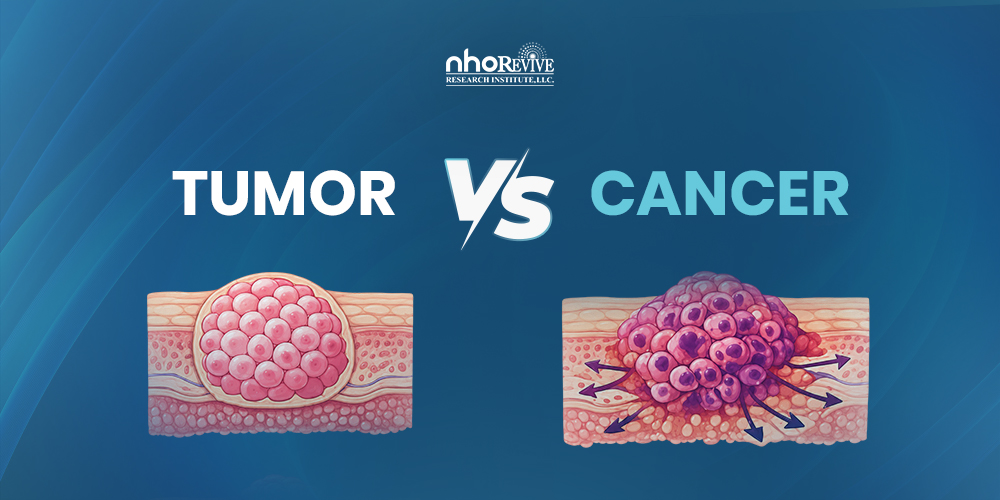
Although the terms are often used interchangeably, a tumor is not always cancer. A tumor is an abnormal growth of cells that may be benign (non-cancerous) or malignant (cancerous). Cancer refers only to malignant tumors that can invade nearby tissues and spread to other parts of the body.
How Do Tumors Develop?
Tumors develop when the body’s normal process of cell growth and death becomes disrupted. Healthy cells normally divide, repair themselves, and die when they become old or damaged. However, when DNA is altered, abnormal cells continue to grow instead of dying. Over time, these cells multiply, accumulate, and form a tumor.
This process usually occurs gradually over many years, which is why regular health checkups and recommended screenings are important for early detection.
Types of Tumor Classifications
Doctors classify tumors in several ways to better understand how they behave, where they develop, and how they are likely to respond to treatment. These classifications help guide diagnosis, treatment decisions, and prognosis.
1. Classification by Behavior
One of the most important ways to classify tumors is by their biological behavior. This determines whether a tumor is benign (non-cancerous), premalignant (precancerous), or malignant (cancerous).
Benign Tumors
Benign tumors remain localized and do not spread to other parts of the body. Although they are not cancerous, they may still cause symptoms by pressing on nearby tissues.
Examples: Lipoma, fibroma, and phyllodes tumor of the breast.
Premalignant (Precancerous) Lesions
Premalignant lesions contain abnormal cells that are not cancer but have the potential to become malignant over time if left untreated. These changes may be classified as low-grade dysplasia or high-grade dysplasia, depending on how abnormal the cells appear.
Examples: Tubular adenoma of colon, actinic keratosis, cervical dysplasia, and Barrett’s esophagus.
Malignant Tumors
Malignant tumors are cancerous growths that invade nearby tissues and can spread to other parts of the body through the blood or lymphatic system (metastasis).
Examples: Breast cancer, lung cancer, melanoma, colorectal cancer, and osteosarcoma.
The table below summarizes the key differences between these three tumor types.
Behavior Classification Comparison
2. Classification by Physical State
Tumors are also classified based on whether they form a solid mass or affect the blood and immune system.
Solid Tumors
Solid tumors form a distinct mass within an organ or tissue and may be benign or malignant.
Examples: Brain tumor, kidney tumor, bone tumor, and ovarian tumor.
Liquid Tumors
Also known as hematologic cancers, liquid tumors affect the blood, bone marrow, or lymphatic system instead of forming a solid mass.
Examples: Leukemia, lymphoma and multiple myeloma.
The comparison below highlights the main differences between solid and liquid tumors.
Solid vs. Liquid Tumors
3. Classification by Tissue or Cell of Origin
Tumors are also grouped according to the type of cell or tissue where they begin, as this often influences diagnosis, treatment, and prognosis.
- Carcinomas: Begin in epithelial cells that line the skin, glands, and internal organs. (Examples: breast, lung, colorectal, and prostate cancers.)
- Sarcoma cancers: Develop in connective tissues such as bone, muscle, fat, and cartilage. (Examples: liposarcoma, GIST tumors, and giant cell tumors)
- Hematologic tumors: Affect blood-forming tissues. (Examples: leukemia, lymphoma, and multiple myeloma.)
- Melanocytic tumors: Arise from melanocytes, the cells that produce skin pigment. (Examples: benign moles and melanoma.)
- Germ cell tumors: Develop from reproductive cells. (Examples: seminoma and teratoma.)
- Brain and CNS tumors: Originate in the brain or spinal cord. (Examples: glioblastoma and meningioma.)
4. Classification by Origin
Tumors are also classified by where they first develop. This is especially important because cancer treatment is based on the tumor’s primary site, even if it has spread.
Primary Tumors
A primary tumor is the original tumor that develops in an organ or tissue. For example, Wilms tumor, which originates from the kidney itself and is known as a primary pediatric renal malignancy.
Secondary (Metastatic) Tumors
A secondary, or metastatic, tumor develops when cancer cells spread from the primary tumor to another part of the body. For example, breast cancer that spreads to the bones (bone metastasis) is still called metastatic breast cancer not bone cancer.
The table below summarizes the difference between primary and secondary tumors.
Primary vs. Secondary (Metastatic) Tumors
Cyst vs Tumor: What’s the Difference?
Although cyst vs tumor is a common source of confusion, they are not the same. A cyst is a sac filled with fluid, air, or semi-solid material, whereas a tumor or neoplasm is an abnormal growth of cells that may be benign or malignant.
Other terms you may hear include polyps, which are growths that arise from the lining of an organ, and nodules, which are small solid lumps that can develop in tissues such as the thyroid or lungs. Because these growths can appear similar, doctors often use imaging tests or a biopsy to determine exactly what they are.

What Causes Tumors?
While there is no single explanation for all tumor causes, most tumors develop because of a combination of genetic, environmental, and lifestyle factors.
While certain factors can increase your risk, having one or more risk factors does not mean you will develop a tumor.
Common risk factors include:
- Increasing age, as DNA damage accumulates over time.
- Genetic mutations, such as mutated BRCA1/BRCA2 genes.
- Inherited conditions, such as Lynch syndrome and neurofibromatosis (NFS).
- Family history of certain types of cancer like breast cancer or prostate cancer.
- Smoking and other tobacco products
- Excessive alcohol consumption
- Obesity, physical inactivity, and an unhealthy diet
- Exposure to ultraviolet (UV) rays or ionizing radiation, which can cause skin cancer.
- Certain infections, including HPV (linked to cervical cancer) and hepatitis B or C (linked to liver cancer).
- Long-term exposure to harmful chemicals, chronic inflammation, and hormonal changes, which may also contribute to the development of some tumors.
Signs and Symptoms of a Tumor
Tumor symptoms vary depending on the type, size, and location of the tumor. Some tumors cause noticeable symptoms, while others may not cause any signs until they grow larger or are found during routine imaging or health screenings.
Common symptoms may include:
- A new or growing lump, such as in a parotid gland tumor or breast cancer
- Persistent pain
- Unexplained weight loss
- Ongoing fatigue
- Persistent cough or difficulty swallowing
- Frequent headaches or vision changes
- Changes in bowel or bladder habits
- Unusual bleeding or skin changes, such as in a fungating breast tumor
The symptoms you experience often depend on where the tumor develops. For example, a brain tumor may cause headaches or seizures, while a lung tumor can lead to a persistent cough or shortness of breath.
How Is a Tumor Diagnosed?
Diagnosing a tumor involves several tests to determine whether a growth is present, if it is benign or malignant, and whether it has spread.
Medical History and Physical Examination
Your healthcare provider will review your symptoms, medical and family history, lifestyle, and risk factors before performing a physical examination.
Imaging Tests
Imaging helps doctors locate a tumor, assess its size, and check whether it has spread. Common imaging tests include:
- X-rays
- Ultrasound
- CT scan
- MRI
- PET scan
- Bone scan (when needed)
Laboratory Tests
Blood and urine tests can provide clues about certain tumors and your overall health. These may include:
- Complete Blood Count (CBC)
- Liver and kidney function tests
- Tumor markers, such as PSA, CA-125, AFP, CEA, and CA 19-9
Tumor markers alone cannot diagnose cancer but may help support diagnosis or monitor treatment.
Biopsy
A biopsy is the gold standard for diagnosing most tumors. During the procedure, a small tissue sample is examined under a microscope to determine:
- Whether the tumor is benign or malignant
- The tumor type and grade
- Molecular features that may guide treatment
Common biopsy methods include needle, endoscopic, surgical, and bone marrow biopsies.
Molecular and Genetic Testing
Many tumors are also tested for genetic and molecular changes to help select the most effective treatment. Common tests include:
- Histopathology to examine tumor cells
- Immunohistochemistry (IHC) to identify the tumor type
- Next-Generation Sequencing (NGS) to detect gene mutations
- FISH/CISH to identify specific genetic changes
- PD-L1 testing to assess eligibility for immunotherapy
Molecular testing supports precision medicine, helping doctors choose more personalized treatments and improving the chances of better outcomes while avoiding unnecessary therapies.
Understanding Tumor Grading and Staging
Although tumor grade and tumor stage are sometimes confused or used interchangeably, they describe different aspects of a tumor. Grade indicates how abnormal the tumor cells look and how aggressively they are likely to grow, while stage describes the size of the tumor and whether it has spread. Together, they help doctors determine the most appropriate treatment and estimate prognosis.
Tumor Grade: How Aggressive Is It?
Tumor grade describes how abnormal the tumor cells look under a microscope. In general, low-grade tumors grow more slowly, while high-grade tumors are more likely to grow and spread quickly.
Tumor Stage: Has It Spread?
Tumor stage describes how much cancer is present and whether it has spread. Doctors commonly use the TNM staging system:
- T (Tumor): Size and extent of the primary tumor
- N (Nodes): Whether nearby lymph nodes contain cancer
- M (Metastasis): Whether cancer has spread to distant organs
How Are Tumors Treated?
Treatment depends on the tumor’s type, location, size, stage, and whether it is benign or malignant. In many cases, more than one treatment is used to achieve the best outcome.
Surgery
Surgery removes all or part of a tumor and is often the first treatment for localized solid tumors. It may also relieve symptoms caused by larger or advanced tumors.
Radiation Therapy
Radiation therapy uses high-energy rays to destroy cancer cells or shrink tumors. It may be given before or after surgery, as a primary treatment, or to help relieve symptoms.
Chemotherapy
Chemotherapy uses medications to destroy rapidly dividing cancer cells. It may be used before surgery, after surgery, alongside radiation therapy, or to treat advanced or metastatic cancer.
Targeted Therapy
Targeted therapy attacks specific genetic or molecular changes that drive tumor growth, such as HER2, EGFR, ALK, or BRAF mutations.
Immunotherapy
Immunotherapy helps the immune system recognize and attack cancer cells. It has improved outcomes for several cancers, including melanoma, lung, kidney, and bladder cancers, as well as certain lymphomas.
Hormone Therapy
Some tumors rely on hormones to grow. Hormone therapy is commonly used to treat breast, prostate, and endometrial cancers.
Stem Cell Transplant
Stem cell transplantation is mainly used for leukemia, lymphoma, and multiple myeloma to replace damaged bone marrow with healthy blood-forming stem cells.
Active Surveillance
Not all tumors or neoplasms require immediate treatment. Some slow-growing tumors can be safely monitored with regular checkups, imaging, and blood tests, with treatment starting only if the tumor begins to grow or cause symptoms.
The Role of Clinical Research in Tumor Treatment
Advances in cancer care continue to improve how tumors are diagnosed and treated and clinical trials for oncology play an important role in that progress. These research studies evaluate new medications, targeted therapies, immunotherapies, and treatment approaches to determine whether they are safe and effective.
For people diagnosed with cancers that form solid masses, solid tumor clinical trials may provide access to investigational treatments while helping researchers develop better therapies for future patients. If you’re interested in participating in a clinical trial, speak with your healthcare provider to determine whether a study may be appropriate for your condition.
Is Tumor Curable?
Whether a tumor is curable depends on its type, location, and whether it is benign or malignant. Benign tumors, such as skin lipomas or uterine fibroids, are often cured with surgery or may not require treatment at all.
Likewise, some malignant tumors, such as early-stage breast cancer or localized prostate cancer, can be cured when diagnosed and treated early. However, advanced cancers that have spread may require long-term treatment to control the disease rather than cure it.
How to Prevent Tumors?
Not all tumors or neoplasms can be prevented, especially those caused by inherited genetic mutations or age-related changes. However, many cancers can be lowered by reducing known risk factors and maintaining a healthy lifestyle.
You can reduce your risk by:
- Avoiding tobacco products
- Maintaining a healthy weight
- Staying physically active
- Eating a balanced diet
- Limiting alcohol consumption
- Protecting your skin from excessive sun exposure
- Getting recommended vaccines, such as HPV and hepatitis B
- Following recommended cancer screening guidelines
- Limiting exposure to harmful chemicals and unnecessary radiation
Outlook for Tumors
The outlook for a tumor depends on its type, location, stage, and how early it is diagnosed. Benign tumors, such as lipomas and uterine fibroids, often have an excellent prognosis and may require little or no treatment. Some cancers, including early-stage breast and thyroid cancer, can also be treated successfully when detected early, while advanced tumors may require ongoing treatment to control the disease.
When Should You See a Doctor?
Many tumors or neoplasms do not cause symptoms in their early stages, but some warning signs should not be ignored. See a healthcare provider if you experience:
- A new or growing lump
- Unexplained weight loss
- Persistent pain
- Changes in a mole or skin lesion
- Blood in the urine or stool
- Difficulty swallowing
- A cough lasting more than three weeks
- Frequent headaches or seizures
- Ongoing fatigue without a clear cause
Early evaluation can help identify the cause and, if needed, lead to timely diagnosis and treatment.
Conclusion
Understanding what a tumor or neoplasm is and how it is classified can help you make informed healthcare decisions. While some tumors are benign and require little treatment, others need prompt medical attention. Early diagnosis, timely treatment, and regular follow-up remain key to improving outcomes.
As research continues to advance, clinical research studies in Nebraska are helping evaluate potential new therapies and improve future treatment options for a wide range of health conditions, offering eligible participants the opportunity to contribute to medical progress.
FAQs
What does a tumor look like?
A tumor may appear as a lump or swelling under the skin, while tumors inside the body are usually detected with imaging tests such as an ultrasound, CT scan, or MRI.
Is a tumor hereditary?
Most tumors are not hereditary. However, some are linked to inherited genetic mutations or a family history of certain cancers.
Can a tumor turn into cancer?
Some precancerous growths can become cancer if left untreated, but most benign tumors do not turn into cancer.
Is a tumor harmful?
It depends on the type. Benign tumors are usually harmless but may cause symptoms, while malignant tumors are cancerous and can spread.
What are the first signs of a tumor?
Symptoms vary but may include a new lump, persistent pain, unexplained weight loss, fatigue, or changes in bowel, bladder, or skin health.
Disclaimer: This article is for educational purposes only and is not a substitute for professional medical advice, diagnosis, or treatment. Always consult a qualified healthcare provider regarding any health concerns or medical decisions.