Note: This content is for educational purposes only and is not intended to replace professional medical advice, diagnosis, or treatment. Always consult your healthcare professional for personalized guidance regarding your symptoms and treatment options.
AI Overview
Non-small cell lung cancer (NSCLC) is the most common type of lung cancer and includes subtypes such as adenocarcinoma, squamous cell carcinoma, and large cell lung carcinoma. Symptoms vary depending on the cancer’s location and stage, and diagnosis may involve imaging, biopsy, biomarker testing, and molecular testing. Treatment depends on the cancer’s subtype, stage, molecular characteristics, and overall health.
Key Takeaways:
- Non-small cell lung cancer (NSCLC) is the most common type of lung cancer.
- NSCLC includes several subtypes, with adenocarcinoma, squamous cell carcinoma, and large cell lung carcinoma among the main types.
- Symptoms can vary depending on the cancer’s location, subtype, and stage.
- Smoking is the leading risk factor, but NSCLC can also occur in people who have never smoked.
- Diagnosis may involve a medical history, physical examination, imaging, biopsy, biomarker testing, and molecular testing.
- NSCLC is staged from 0 to IV based on the size and spread of the cancer.
- Treatment may include surgery, radiation therapy, chemotherapy, targeted therapy, immunotherapy, or a combination of these approaches.
- Clinical trials are evaluating potential new treatment options for people with NSCLC.
Lung cancer is a type of cancer that develops when abnormal cells in the lungs grow uncontrollably and form a tumour. It can affect breathing and may spread to other parts of the body as it progresses.
Non-small cell lung cancer (NSCLC) is the most common type of lung cancer, accounting for most lung cancer cases. NSCLC is not a single disease but includes several subtypes, with adenocarcinoma, squamous cell carcinoma, and large cell lung carcinoma being the main types.
The symptoms, treatment options, and outlook for NSCLC can vary depending on its subtype, stage, and other individual factors. Detecting and diagnosing NSCLC early can help healthcare professionals determine the most appropriate treatment approach.
What Is Non-Small Cell Lung Cancer?
Non-small cell lung cancer (NSCLC) is a type of lung cancer that develops when abnormal cells in the lungs grow and multiply uncontrollably. It is the most common type of lung cancer, accounting for about 80% to 85% of cases.
NSCLC differs from small cell lung cancer (SCLC), the other main type of lung cancer. The two types are named based on how their cancer cells look under a microscope. SCLC generally grows and spreads more quickly than NSCLC, although the behaviour of NSCLC can vary depending on its type and other factors.
NSCLC can develop in different types of cells in the lungs. As abnormal cells continue to grow, they can form a lung tumor and invade nearby lung tissue. In some cases, the cancer can spread to nearby lymph nodes, tissues, or other parts of the body. This spread is known as metastasis.
Some people with NSCLC may develop a malignant pleural effusion, which is a buildup of fluid around the lungs caused by cancer. It can contribute to shortness of breath, chest discomfort, or a persistent cough.
Types of Non-Small Cell Lung Cancer
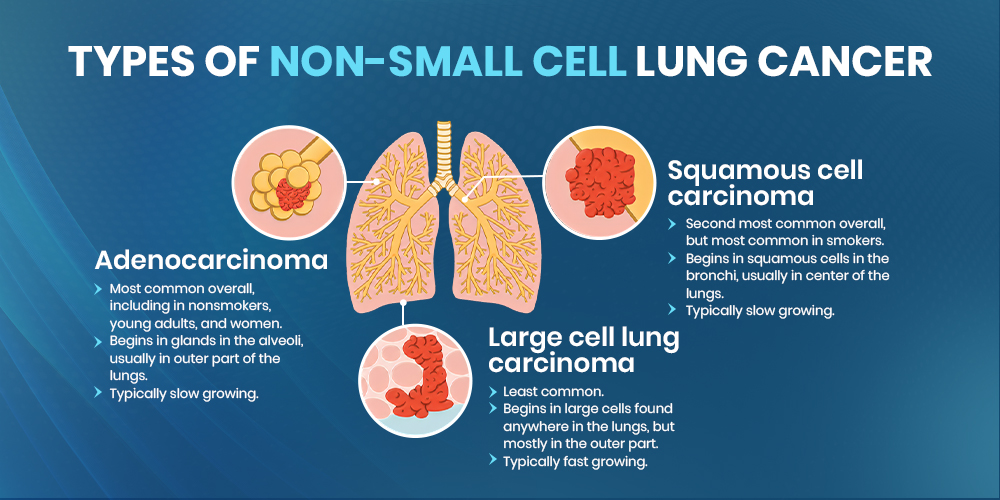
There are several types of non-small cell lung cancer (NSCLC). The three main types are adenocarcinoma, squamous cell carcinoma, and large cell lung carcinoma. They differ in where they develop and how the cancer cells appear under a microscope.
Adenocarcinoma
Adenocarcinoma of the lung usually develops in the outer areas of the lungs and begins in cells that produce substances such as mucus. It is the most common type of NSCLC and can occur in people who have never smoked, although smoking remains an important risk factor.
Squamous Cell Carcinoma
Squamous cell carcinoma usually develops in the central parts of the lungs, often near the larger airways called the bronchi. It begins in squamous cells, which are thin, flat cells that line the inside of the airways. Smoking is strongly associated with this type of lung cancer.
Large Cell Lung Carcinoma
Large cell lung carcinoma (LCLC) can develop in any part of the lungs. Under a microscope, its cancer cells appear large and abnormal. It may be diagnosed when the cancer does not have the features that identify it as adenocarcinoma or squamous cell carcinoma, making it a diagnosis of exclusion.
Other Less Common NSCLC Types
In addition to the three main types, NSCLC includes several less common subtypes. These include adenosquamous carcinoma, sarcomatoid carcinoma, and other rare forms. These subtypes differ in their cellular features and how they appear under a microscope.
Signs and Symptoms of Non-Small Cell Lung Cancer
NSCLC may not cause noticeable symptoms in its early stages. When symptoms do occur, they can vary depending on the location and extent of the cancer. Common symptoms may include:
- Persistent or worsening cough
- Coughing up blood
- Shortness of breath
- Wheezing
- Chest pain
- Hoarseness or changes in the voice
- Recurring respiratory infections, such as bronchitis or pneumonia
- Difficulty swallowing
- Unexplained weight loss
- Loss of appetite
- Persistent tiredness or weakness
- Swelling in the face or neck
- Bone pain, which may occur if the cancer spreads to the bones
- Headaches, dizziness, weakness, or balance problems, which may occur if the cancer spreads to the brain or nervous system
- Jaundice, which may occur if the cancer affects the liver
- Nausea, vomiting, or constipation, which may occur when certain complications develop
- Some NSCLC tumours develop near the top of the lung and are called Pancoast tumors. They may cause shoulder or arm pain and weakness in the hand.
Having one or more of these symptoms does not necessarily mean you have lung cancer. However, persistent, worsening, or unexplained symptoms should be evaluated by a healthcare professional.
What Causes Non-Small Cell Lung Cancer?
Non-small cell lung cancer (NSCLC) develops when changes occur in the DNA of lung cells. These changes can disrupt the normal processes that control cell growth and division, causing abnormal cells to multiply uncontrollably and form a tumour.
There is not always one identifiable cause of NSCLC. Several factors can contribute to the DNA changes that lead to cancer, and some people may develop NSCLC without a clear risk factor.
Risk Factors for NSCLC
Certain exposures and other factors can increase the likelihood of developing NSCLC. The main risk factors include:
Smoking
Cigarette smoking is the leading risk factor for lung cancer. Tobacco smoke contains substances that can damage the DNA of lung cells. The risk generally increases with the amount and duration of smoking. However, people who have never smoked can also develop NSCLC.
Second-hand Smoke
Regular exposure to second-hand smoke can also increase the risk of lung cancer. This includes breathing in smoke from burning tobacco products or smoke exhaled by someone who is smoking.
Radon Exposure
Radon is a naturally occurring radioactive gas that can build up indoors. Long-term exposure to high levels of radon can damage lung cells and increase the risk of lung cancer.
Occupational and Environmental Exposure
Long-term exposure to certain substances at work or in the environment can increase lung cancer risk. These include:
- Asbestos, a mineral fibre used in some construction and industrial materials.
- Certain chemicals and workplace substances, including some metals and mineral dusts.
- Air pollution, particularly prolonged exposure to high levels of outdoor air pollution.
Family History and Genetics
Having a close family member with lung cancer may increase your risk. Certain inherited genetic changes may also make some people more susceptible to developing lung cancer. However, having a family history does not mean that you will develop NSCLC.
Previous Radiation Exposure
Previous radiation therapy involving the chest may increase the risk of developing lung cancer later in life. The risk can depend on factors such as the area treated, radiation dose, and other individual factors.
How Is Non-Small Cell Lung Cancer Diagnosed?
Doctors use several tests to determine whether a person has non-small cell lung cancer (NSCLC). The process usually begins with a medical history and physical examination, followed by imaging and other tests when needed. If a suspicious area is found, a biopsy may be vperformed to confirm whether cancer cells are present.
Medical History and Physical Examination
A healthcare professional will ask about symptoms and factors that may affect lung cancer risk. This may include:
- Current or previous smoking
- Exposure to secondhand smoke, radon, asbestos, or other substances
- Previous radiation exposure
- Personal and family medical history
- Symptoms such as persistent cough, chest pain, or shortness of breath
A physical examination may also help identify signs that require further testing.
Imaging Tests
Imaging tests can help doctors identify abnormal areas in the lungs and determine whether a tumour may be present. Common imaging tests include:
- Chest X-ray: May show an abnormal area or mass in the lungs.
- CT scan: Provides more detailed images of the lungs and surrounding structures than a standard X-ray.
- PET scan: May help show areas of increased activity and determine whether cancer may have spread to other parts of the body.
- MRI: May be used when doctors need detailed images of certain areas, such as the brain.
Biopsy
A biopsy involves removing a small sample of tissue or cells for examination under a microscope. It is often needed to confirm whether an abnormal area contains cancer cells and to determine the type of lung cancer.
The sample may be collected through procedures such as bronchoscopy, a needle biopsy, or surgery, depending on the location of the suspected tumour and other factors.
Laboratory and Molecular Testing
After NSCLC is diagnosed, additional testing may be performed on the tumour tissue. Biomarker testing looks for specific genetic changes, proteins, or other characteristics in cancer cells.
Molecular testing can identify certain genetic changes in the tumour that may guide which treatments are appropriate. These results can help doctors develop a treatment plan based on the characteristics of the cancer.
Stages of Non-Small Cell Lung Cancer
Staging describes how much cancer is present and how far it has spread. Doctors use the TNM staging system, which considers the size and location of the tumour, whether nearby lymph nodes contain cancer, and whether the cancer has spread to distant parts of the body.
NSCLC is generally grouped into Stages 0 through IV:
Stage 0
Abnormal cells are present in the lining of the airways but have not invaded deeper lung tissue or spread to other parts of the body.
Stage I
The cancer is limited to the lung and has not spread to nearby lymph nodes. Stage I is divided into different sub-stages based mainly on the size and characteristics of the tumour.
Stage II
The cancer may be larger or may have spread to nearby lymph nodes or structures within the lung. The specific extent of spread determines whether the cancer is classified as Stage IIA or Stage IIB.
Stage III
The cancer has spread to nearby lymph nodes and may have grown into nearby tissues or structures in the chest. Stage III includes several sub-stages based on how far the cancer has spread.
Stage IV
The cancer has spread beyond the lung and nearby areas to distant parts of the body. This is known as metastatic NSCLC. Common sites of spread include the brain, bones, liver, or distant lymph nodes.
Why Is NSCLC Staging Important?
Staging helps healthcare professionals understand the extent of the cancer and determine which treatment approaches may be appropriate. Doctors consider the stage along with factors such as the cancer’s subtype, molecular characteristics, overall health, and treatment goals when developing a treatment plan.
Treatment for Non-Small Cell Lung Cancer
Treatment for non-small cell lung cancer (NSCLC) depends on factors such as the cancer’s stage, subtype, molecular characteristics, and overall health. Doctors may use one treatment or combine several approaches to treat the cancer, control its growth, or relieve symptoms.
Surgery
Surgery may be considered when NSCLC is limited to the lung or nearby areas and can be removed safely. The goal is to remove the tumour along with some surrounding tissue. Depending on the tumour’s size and location, surgery may involve removing:
- A small section of lung (wedge resection)
- A lobe of the lung (lobectomy)
- An entire lung (pneumonectomy)
Additional treatment, such as chemotherapy, immunotherapy, or radiation therapy, may be recommended before or after surgery in some cases.
Radiation Therapy
Radiation therapy uses high-energy radiation to damage and destroys cancer cells. It may be used to treat NSCLC that cannot be removed with surgery or to target cancer that has spread to other areas.
Radiation may also be given before or after surgery in certain situations. It can sometimes be combined with chemotherapy or used to relieve symptoms caused by advanced cancer.
Chemotherapy
Chemotherapy uses medicines that destroy cancer cells or slow their growth. It may be used before or after surgery, alongside radiation therapy, or as part of treatment for advanced NSCLC.
Depending on the cancer and treatment plan, chemotherapy may be used alone or combined with other treatments.
Targeted Therapy
Targeted therapy uses medicines designed to act on specific genetic or molecular changes that help cancer cells grow and survive. These treatments are only appropriate when the cancer has a target that the available therapy can act on.
Biomarker testing can identify certain genetic changes or other characteristics in the cancer cells. The results can help doctors determine whether a targeted therapy may be appropriate.
Immunotherapy
Immunotherapy uses medicines that help the immune system recognize and attack cancer cells. It may be used for certain types and stages of NSCLC, either on its own or alongside other treatments such as chemotherapy.
The suitability of immunotherapy depends on factors such as the cancer’s characteristics, stage, and biomarker results.
Combination Treatments
NSCLC treatment often involves more than one approach. For example, a treatment plan may combine surgery with chemotherapy, radiation therapy, immunotherapy, or targeted therapy.
The combination and sequence of treatments depend on the cancer’s stage, location, molecular characteristics, and the person’s overall health.
Clinical Research for Non-Small Cell Lung Cancer
Oncology clinical research evaluates potential new treatment options for cancer prevention, diagnosis, and treatment. For example, non-small cell lung cancer clinical trials are evaluating investigational treatments to assess their safety and effectiveness. These studies can help researchers investigate potential new treatment options and advance cancer research.
Conclusion:
Non-small cell lung cancer is a complex disease with different subtypes, stages, and treatment approaches. Early diagnosis and appropriate testing can help guide treatment decisions. Ongoing clinical research continues to explore potential new options. NHO Revive is conducting oncology clinical trials to evaluate investigational treatments for cancer.
Frequently Asked Questions
What is the survival rate for non-small cell lung cancer?
The overall 5-year relative survival rate for non-small cell lung cancer (NSCLC) is about 32%. Survival varies depending on how far the cancer has spread when diagnosed. The 5-year relative survival rate is approximately 67% for localized NSCLC, 40% for regional NSCLC, and 12% for distant NSCLC. These are population estimates and do not predict an individual’s outcome.
How fast does non-small cell lung cancer spread?
Non-small cell lung cancer (NSCLC) can grow and spread at different rates depending on the cancer’s subtype, tumour biology, and individual factors. Some tumours may grow relatively slowly, while others can progress more quickly. Therefore, there is no specific timeframe that applies to everyone with NSCLC.
Which is more serious, small cell or non-small cell lung cancer?
Small cell lung cancer (SCLC) is generally considered more aggressive than non-small cell lung cancer (NSCLC) because it tends to grow and spread more quickly. It is also often diagnosed after it has already spread, which can make treatment more challenging. However, the outlook for either type depends on factors such as the cancer’s stage, subtype, and response to treatment.
Is squamous cell lung cancer non-small cell?
Yes. Squamous cell lung cancer is a type of non-small cell lung cancer (NSCLC). It develops in squamous cells lining the airways and is one of the main subtypes of NSCLC. It is often associated with a history of smoking, although it can also occur in people who have never smoked.
Is non-small cell lung cancer hereditary?
Most non-small cell lung cancers (NSCLC) are not hereditary and are not directly passed from parents to children. Most develop because of genetic changes acquired during a person’s lifetime, often linked to factors such as smoking and other environmental exposures. However, having a family history of lung cancer may increase your risk in some cases.