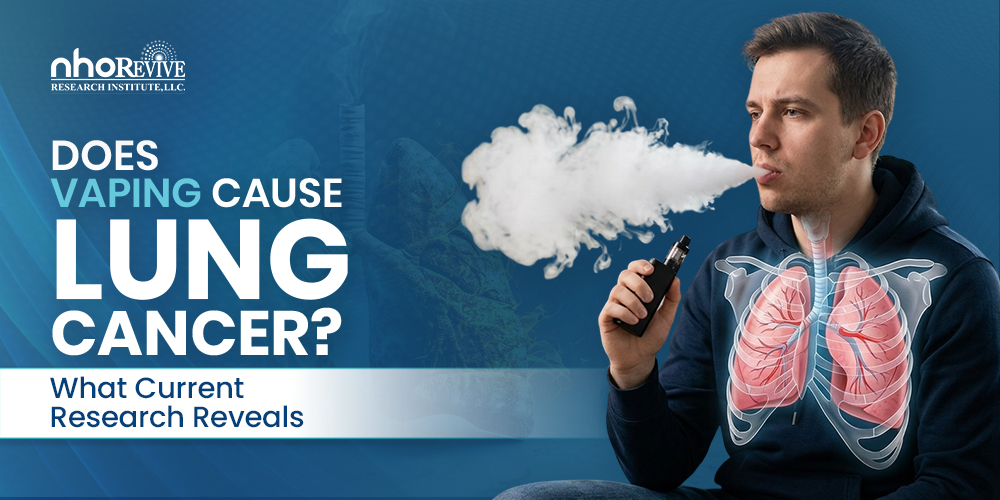
Vaping has grown fast among teens and adults who want an alternative to cigarettes. But does that switch actually protect your lungs, or does it carry its own cancer risk? Below, we break down what current oncology research says about vaping, lung cancer, and your long-term health.
Key Takeaways
- Consistently, recent studies link vaping to biomarkers of genotoxicity, oxidative stress, and tumor growth in lung tissue.
- Additionally, dual use of vapes and cigarettes raises lung cancer risk far more than either product alone.
- Vaping is not a proven safe substitute for smoking, and early evidence points to real cancer risk.
- Several lung cancer types, including adenocarcinoma and large cell lung carcinoma, have been tied to inhaled aerosol exposure.
- Clinical research studies continue to test better screening, prevention, and treatment options for smoking and vaping-related lung disease.
Quick Answer:
Yes, vaping can cause lung cancer, and current research backs this up. Studies show that vaping exposes your lungs to chemicals linked to genotoxicity, oxidative stress, and tumor growth, all of which play a role in cancer development. A 2025 systematic review found consistent links between vaping and these cancer-related biomarkers, and other studies have shown lung cancer risk climbing sharply among people who vape. The risk goes up even more if you both vape and smoke, since dual use has an additive effect on your lungs. So while vaping may involve fewer combustion byproducts than cigarettes, it is not risk-free. If you vape regularly, talk to your doctor about screening and quitting support.
Introduction
For years, many people believed vaping was a safer habit than smoking. Consequently, millions switched to e-cigarettes hoping to protect their lungs. However, newer research tells a different story. Scientists now report that vaping exposes lung tissue to chemicals linked with cancer growth. This blog looks at what the evidence actually shows about vaping and lung cancer, which lung tumor types are involved, and how you can lower your risk. We will also cover how oncology clinical research, including trials happening close to home, is helping researchers understand this evolving health concern.
What Is Vaping and How Does It Affect the Lungs?
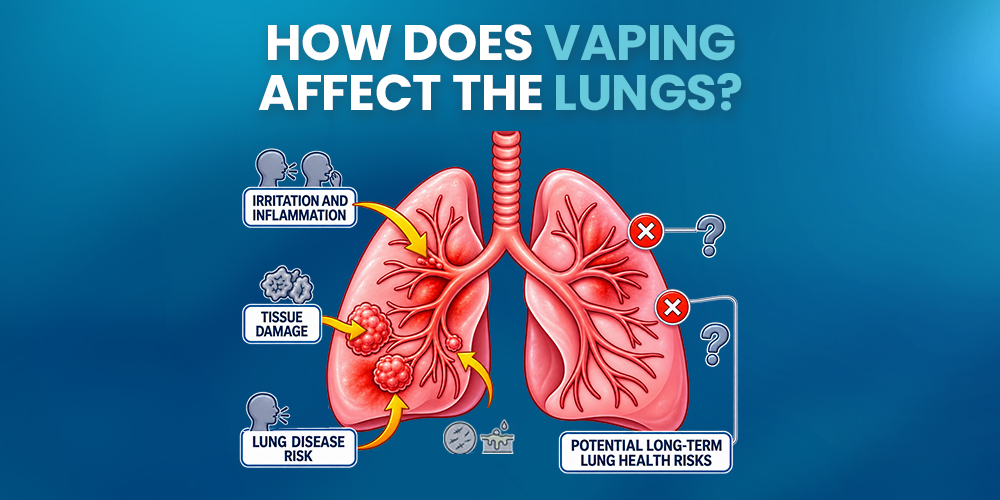
Vaping involves inhaling a heated aerosol produced by an e-cigarette device. Typically, this aerosol contains nicotine, flavoring chemicals, and other additives. Once inhaled, these particles settle deep into lung tissue. Consequently, the airway lining gets repeatedly exposed to fine chemical particles with every puff. Over time, this exposure can trigger inflammation, cell damage, and abnormal tissue growth. Furthermore, some flavoring compounds break down into byproducts that irritate the lungs even more when heated. This process resembles, in some ways, the damage caused by traditional cigarette smoke, though the exact long-term effects are still being studied.
Does Vaping Cause Lung Cancer? What Studies Show
Recent research increasingly points toward vaping as a genuine cancer risk, not just a lesser evil compared to smoking. A 2025 systematic review found that vaping exposure consistently correlates with biomarkers of genotoxicity, oxidative stress, and tumor growth. Similarly, a major review concluded that nicotine vapes likely cause lung and oral cancers based on evidence from human biomarkers, animal studies, and lab research. Notably, one case control study found lung cancer risk was nearly eight times higher among people who vaped compared to those who did not. Therefore, the idea that vaping carries zero cancer risk no longer holds up against current evidence.
Dual Use Raises the Risk Further
People who both vape and smoke face a much steeper risk than single-product users. Research shows dual use produces an additive effect on lung cancer development. Consequently, someone who smokes cigarettes and vapes regularly may face a risk level far above either habit alone. This finding matters most for young adults who started vaping as their first nicotine product and later added cigarettes.
Types of Lungs Cancer Linked to Smoking and Vaping
Not all lung cancer looks the same under a microscope. Different cell types grow, spread, and respond to treatment in distinct ways. The table below outlines common lung cancer types connected to inhaled toxin exposure, including cigarette smoke and vape aerosol.
Malignant pleural effusion, a buildup of fluid around the lungs, frequently develops as lung tumors advance. Consequently, doctors often use it as a warning sign that cancer has progressed beyond its original site.
Does Smoking Weed Cause Lung Cancer Too?
This question comes up often, and the answer is not simple. Growing research suggests heavy marijuana smoking may raise the risk of lung cancer and several head and neck cancers. However, scientists still have unanswered questions about dosage, frequency, and combustion method. Similarly to vaping and cigarettes, inhaling any combusted or heated plant material introduces particles that can irritate and damage lung tissue. Therefore, treating marijuana smoke as risk-free is not supported by current evidence.
Is Lung Cancer Curable? Early Detection Matters
Lung cancer outcomes depend heavily on the stage at diagnosis. Generally, cancer caught early, before it spreads beyond the lung, offers a much better chance of successful treatment. Unfortunately, many cases are found later, after symptoms like persistent cough, chest pain, or unexplained weight loss appear. Consequently, doctors stress the importance of screening for people with a smoking or vaping history. Newer tools, including blood-based biomarker tests, are being studied to catch lung cancer sooner. While not every case is curable, early treatment consistently improves survival odds and quality of life.
How to Prevent Lung Cancer If You Vape or Smoke
Prevention starts with reducing or quitting exposure to inhaled toxins altogether. Additionally, regular checkups help catch early warning signs before they become serious.
- Talk to your doctor about quitting support, including counseling and approved cessation aids
- Ask about lung cancer screening if you have a long smoking or vaping history
- Avoid dual use of cigarettes and vapes, since combined risk is higher than either alone
- Pay attention to new symptoms like a lingering cough, shortness of breath, or chest discomfort
- Consider genetic and family history discussions with your healthcare provider
Why Clinical Research Matters
Oncology clinical research plays a central role in understanding how vaping affects lung health over time. At NHO Revive, our clinical research studies in Nebraska focus on advancing knowledge around lung cancer detection and treatment. This includes Non-Small Cell Lung Cancer Clinical Trials and Small Cell Lung Cancer Clinical Trials designed to test new approaches for patients at different stages. Participation in a clinical trial not only supports personal care options but also helps researchers refine screening tools for future patients. Because lung cancer research changes quickly, staying connected to current studies gives patients access to options beyond standard treatment.
Conclusion
Current evidence makes one thing clear: vaping is not a risk-free habit for your lungs. Studies consistently link vape exposure to cancer-related biomarkers, and dual use with cigarettes raises that risk even further. Whether you vape, smoke, or have a family history of lung disease, staying informed and screened matters. If you want to learn more about ongoing lung cancer research or see if a clinical trial fits your situation, our team at NHO Revive is here to help you explore your options.
Frequently Asked Questions
Is vape worse than smoking?
Neither product is risk-free. Vaping exposes lungs to fewer combustion byproducts than cigarettes, yet emerging research still links it to real cancer risk.
Can lungs heal after 7 years of vaping?
Lungs have some capacity to repair after you quit, though full recovery depends on total exposure and any existing damage. Talk to your doctor about your specific case.
What are the early signs of vaping damage?
Common early signs include shortness of breath, a persistent cough, chest tightness, and reduced exercise tolerance.
Does vaping cause cancer immediately after starting?
No single answer fits everyone. Cancer risk builds over years of exposure, though inflammation and cell damage can begin much sooner.
How is lung cancer diagnosed in vapers?
Doctors typically use imaging scans, biopsy, and increasingly, blood-based biomarker testing alongside a full smoking and vaping history.