
Quick Answer
Floor of mouth cancer is an oral cancer that develops in the tissue beneath the tongue, usually in squamous cells. Early signs may include persistent sores, red or white patches, bleeding, or difficulty swallowing. Diagnosis involves an examination, biopsy, and imaging, while treatment may include surgery, radiation, or chemotherapy, depending on the stage.
Key Takeaways
- Floor of mouth cancer develops in the soft tissue beneath the tongue.
- Persistent sores, unusual patches, lumps, and unexplained bleeding can be warning signs.
- Tobacco use and alcohol consumption are major risk factors.
- A biopsy helps confirm the diagnosis, while imaging tests help determine whether cancer has spread.
- Treatment depends on the tumor’s size, location, stage, and the patient’s overall health.
- Early diagnosis may improve treatment options and the overall outlook.
What Is Floor of Mouth Cancer?
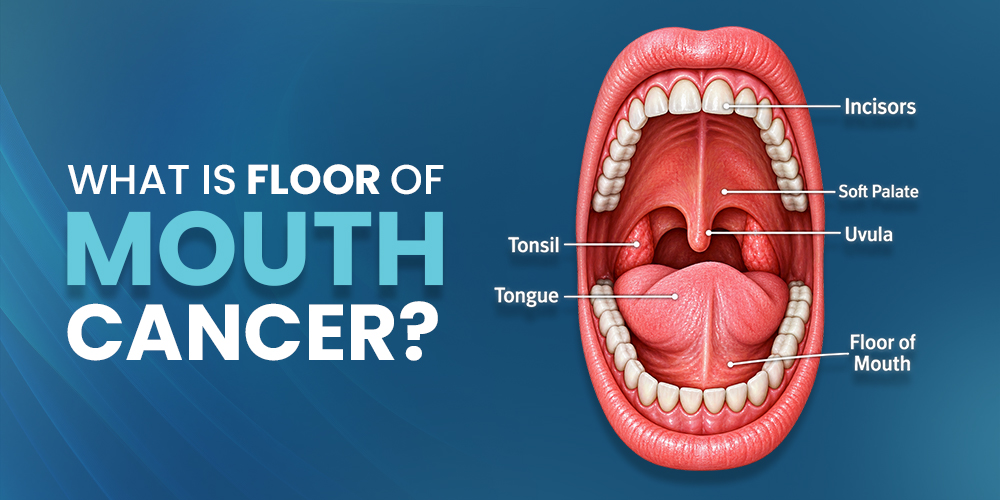
Floor of mouth cancer is a type of oral cancer that develops in the soft tissue between the underside of the tongue and the lower jaw. This area contains muscles, salivary glands, blood vessels, and nerves that support normal mouth functions.
Most cases begin in squamous cells, the thin, flat cells lining the mouth. When these cells develop abnormal changes and grow uncontrollably, they can form a cancerous tumor. This is known as squamous cell carcinoma, the most common type of cancer affecting the oral cavity.
Because the floor of the mouth is close to the tongue, jaw, and other important structures, cancer in this area can affect speaking, chewing, and swallowing as it grows.
Other Types of Oral and Head and Neck Cancers
The mouth and surrounding areas are divided into different anatomical regions. Cancer is classified according to the tissue and location where it first develops. This is why mouth floor cancer is not the same as every other oral or head and neck cancer.
Cancers of the Oral Cavity
These cancers begin inside the mouth. They include tongue cancer (front portion of the tongue), gum cancer, buccal mucosa cancer (inner cheek) and palate cancer (roof of the mouth). Floor of mouth cancer also belongs to this category.
Cancers of Nearby Structures
Some cancers begin in structures around the oral cavity rather than in its lining. Salivary gland cancer originates in the salivary glands, while jaw cancer involves the jawbone or nearby tissues. These have different sites of origin from oral cavity cancers.
Cancers of the Oropharynx and Throat
The oropharynx is located behind the mouth and includes the tonsils, soft palate, and base of the tongue. Tonsil cancer is one type of oropharyngeal cancer. The term throat cancer is broader and can refer to cancers in different parts of the throat, depending on their location.
Although these cancers occur in the same general head and neck region, their anatomical origins determine how they are diagnosed and classified.
What Are Floor of Mouth Cancer Symptoms?
Symptoms can vary depending on the tumor’s size and stage. Early changes may resemble common mouth problems, such as ulcers or irritation. However, unusual changes that persist, grow, or bleed should be examined by a healthcare professional.
Early Signs and Symptoms
Common early signs include:
- Persistent sores: An ulcer beneath the tongue that does not heal.
- Red or white patches: Unusual areas of discoloration, known as erythroplakia (red) or leukoplakia (white), that may require further examination.
- Unexplained bleeding: Bleeding from the affected area without an obvious injury.
- Lumps or thickened tissue: A firm or raised area beneath the tongue.
- Mouth pain: Persistent tenderness or discomfort.
These changes do not necessarily indicate cancer. Other oral conditions can cause similar symptoms, so proper examination is important.
Symptoms as Cancer Progresses
As the tumor grows, it may affect nearby tissues and interfere with normal mouth functions. Symptoms can include:
- Difficulty chewing or swallowing.
- Pain when moving the tongue.
- Changes in speech.
- Numbness in the mouth or tongue.
- Persistent jaw pain or swelling.
- Enlarged lymph nodes or a lump in the neck.
- Unexplained weight loss.
These symptoms can have different causes and do not automatically indicate that cancer has spread. Further medical evaluation can help determine the cause.
What Does Mouth Floor Cancer Look Like?
Floor of mouth cancer may appear as an irregular ulcer, a raised growth, or a thickened area beneath the tongue. Some lesions have a red or white appearance, while others may look like small masses.
The appearance can vary from person to person, and early lesions may not cause noticeable pain. A dentist or doctor can examine these changes and recommend further testing if needed.
What Causes Floor of Mouth Cancer?
Mouth floor cancer develops when cells in the tissue beneath the tongue undergo changes that affect their normal growth and division.
These changes can involve damage to the DNA that controls cell activity. Over time, abnormal cells may multiply, form a tumor, and invade nearby tissues.
There is no single cause responsible for every case. However, certain lifestyle, environmental, and medical factors can increase the risk.
What Are the Risk Factors for Floor of Mouth Cancer?
Several factors can increase the risk of squamous cell carcinoma of the floor of the mouth, particularly tobacco and alcohol use. However, having these risk factors does not mean someone will develop cancer.
1. Tobacco Use
Smoking, chewing tobacco, and using snuff expose oral tissues to harmful chemicals. Betel quid, tobacco-containing preparations, and areca nut (supari) are also important risk factors, particularly in South Asian communities.
2. Alcohol Consumption
Frequent, heavy alcohol consumption is associated with an increased risk of oral cancer and can damage the cells lining the mouth.
3. Combined Tobacco and Alcohol Use
Using tobacco and alcohol together can increase oral cancer risk more than either exposure alone.
4. Human Papillomavirus (HPV)
Certain HPV types are linked to head and neck cancers, particularly oropharyngeal cancer. However, their role varies by cancer site.
5. Weakened Immune System
People with weakened immune systems may have an increased risk of certain cancers.
6. Genetic and Medical Factors
Inherited conditions such as Fanconi anemia are associated with a higher risk of head and neck cancers.
How Is Floor of Mouth Cancer Diagnosed?
Diagnosis involves examining the suspicious area, confirming whether cancer is present, and determining its extent.
1. Physical Examination
A doctor examines the mouth for unusual sores, patches, or lumps and checks the neck for swollen lymph nodes.
2. Biopsy
A biopsy is usually needed to confirm cancer. A small tissue sample is examined under a microscope to identify cancer cells.
3. Imaging Tests
Imaging helps assess tumor size, location, and possible spread. Tests may include:
- CT scan: Examines the mouth, jaw, and surrounding structures.
- MRI: Provides detailed images of soft tissues.
- Ultrasound: Helps evaluate lymph nodes in the neck.
- PET scan: May help identify cancer spread to other parts of the body.
4. Determining the Cancer Stage
Doctors use biopsy and imaging results to determine the cancer stage and guide treatment planning.
What Are the Stages of Floor of Mouth Cancer?
The mouth floor squamous cell carcinoma is staged using the TNM system, which evaluates the primary tumor (T), nearby lymph nodes (N), and distant spread (M).
The stages range from 0 to IV:
- Stage 0: Abnormal cells remain in the surface lining and have not invaded deeper tissues (carcinoma in situ).
- Stage I: The cancer is small and limited to its original site.
- Stage II: The tumor is larger but has not spread to nearby lymph nodes or distant organs.
- Stage III: The cancer may be larger or have spread to a nearby lymph node.
- Stage IV: The cancer is advanced and may involve surrounding structures, multiple lymph nodes, or distant organs.
Staging also considers tumor size, depth of invasion, and lymph node involvement. Stage IV does not always mean the cancer has spread to distant organs.
How Is Mouth Floor Cancer Treated?
The treatment for floor of mouth cancer depends on the tumor’s size, location, stage, and whether it has spread. Doctors also consider the patient’s overall health and how treatment may affect speech, swallowing, and chewing.
Treatment may involve one or more of the following approaches:
1. Surgery
Surgery removes the cancer and, when needed, some surrounding healthy tissue. If cancer has spread to nearby lymph nodes, a neck dissection may also be performed.
2. Radiation Therapy
Radiation therapy uses high-energy rays to destroy cancer cells. It may be used alone in selected cases or after surgery to treat remaining cancer cells.
3. Chemotherapy
Chemotherapy uses medicines to destroy cancer cells or slow their growth. It may be combined with radiation therapy, particularly in more advanced cases.
4. Immunotherapy
Immunotherapy helps the immune system recognize and attack cancer cells. It may be an option for selected patients with advanced or recurrent oral cavity cancer.
5. Combination Treatment
Some patients need multiple treatments, such as surgery followed by radiation, with or without chemotherapy. The care team recommends an approach based on the cancer’s characteristics and the patient’s needs.
Can Floor of Mouth Cancer Spread?
Yes. Floor of mouth cancer can spread to nearby tissues, lymph nodes in the neck, and distant organs.
As it grows, the cancer may involve surrounding structures, including the tongue and jawbone. In advanced cases, it can spread to organs such as the lungs, liver, or bones. This is called metastasis.
The risk of spread depends on factors such as tumor size, depth of invasion, and lymph node involvement. Doctors use imaging and staging tests to assess how far the cancer has spread.
What Is the Prognosis and Life Expectancy for Floor of Mouth Cancer?
The prognosis depends on the cancer stage, tumor size, lymph node involvement, overall health, and response to treatment. Generally, cancer diagnosed before it spreads has a more favorable outlook.
Understanding The Survival Rates
The floor of mouth cancer survival rate varies depending on how far the cancer has spread. According to the American Cancer Society, five-year relative survival rates are:
| Extent of cancer | Five-year relative survival |
|---|---|
| Localized | 72% |
| Regional | 43% |
| Distant | 22% |
These figures are based on people diagnosed between 2015 and 2021. Localized cancer remains at its original site, regional cancer has spread to nearby structures or lymph nodes, and distant cancer has spread to other parts of the body.
A five-year relative survival rate compares people with cancer to the general population. It does not mean a person has only five years to live. These statistics describe groups, not individual outcomes. A cancer specialist can explain what they mean for a patient’s specific diagnosis.
What Does Recovery After Floor of Mouth Cancer Treatment Involve?
Recovery depends on the treatment received and the extent of the cancer. Some patients may experience changes in speech, swallowing, chewing, or tongue movement.
Supportive care may include:
- Speech and swallowing therapy: Helps improve communication and swallowing.
- Nutritional support: Helps maintain adequate nutrition during recovery.
- Dental care: Addresses oral health changes and treatment-related complications.
- Follow-up appointments: Monitor recovery and check for signs of recurrence.
Regular follow-up remains important even after treatment ends.
Can Mouth Floor Cancer Be Prevented?
There is no guaranteed way to prevent floor of mouth cancer, but reducing exposure to known risk factors may lower the risk.
Helpful steps include:
- Avoid smoking and all forms of tobacco.
- Avoid betel quid and areca nut products.
- Limit or avoid alcohol consumption.
- Discuss HPV vaccination with a healthcare professional.
- Maintain good oral hygiene and attend regular dental checkups.
- Have persistent mouth changes examined.
When Should You See a Doctor?
Consult a healthcare professional if you notice:
- A mouth ulcer that does not heal within two weeks.
- Persistent red or white patches beneath the tongue.
- An unexplained lump or tumor under the tongue.
- Repeated bleeding or persistent mouth pain.
- Difficulty swallowing or moving the tongue.
- A new lump or swelling in the neck.
These symptoms do not necessarily indicate cancer, but early evaluation can help identify their cause. Do not wait for symptoms to worsen before seeking medical advice.
The Role of Clinical Trials in Floor of Mouth Cancer Research
A mouth floor cancer diagnosis may lead patients to have questions about available treatment options and what comes next. Clinical trials give researchers a way to study potential new treatments and explore different approaches to cancer care.
Head and neck cancer clinical trials may examine treatment combinations, immunotherapy, radiation approaches, or ways to manage treatment-related side effects. Each study has specific eligibility requirements, and participation is always voluntary. A clinical trial may not directly benefit every participant, so patients should discuss potential risks and considerations with their healthcare team.
Patients interested in learning about research options can ask their healthcare provider about relevant studies. Those looking for cancer clinical research studies in Nebraska can explore available opportunities at NHO Revive.
Conclusion
Understanding floor of mouth cancer, from its early warning signs to diagnosis and treatment, can help people make informed decisions about their health. Persistent sores, unusual patches, or unexplained changes underneath the tongue should be evaluated by a healthcare professional. Although the outlook varies by stage and individual health factors, timely diagnosis and appropriate care are important.
Research also continues to explore different approaches to oral cancer treatment. At NHO Revive, patients can learn about clinical trials for oncology and explore whether an available study may be relevant to their circumstances.
Frequently Asked Questions
Is floor of mouth cancer curable?
Yes. The mouth floor cancer can be curable, particularly when diagnosed early. Treatment may include surgery, radiation therapy, or a combination, depending on the cancer stage and extent.
What is the survival rate for floor of mouth cancer?
According to the American Cancer Society, five-year relative survival rates are approximately 72% for localized, 43% for regional, and 22% for distant cancer. These are population-based estimates, not individual predictions.
How fast does floor of mouth cancer spread?
There is no fixed timeline. The rate of progression varies depending on tumor size, depth, and other characteristics. Biopsies and imaging help doctors assess its spread.
Is mouth floor the same as tongue cancer?
No. Floor of mouth cancer develops in the tissue beneath the tongue, while tongue cancer develops in the tongue itself. Both are types of oral cavity cancer.
Can floor of mouth cancer come back after treatment?
Yes. Cancer can recur in the original area, nearby lymph nodes, or other parts of the body. Regular follow-up appointments help monitor for recurrence.
Medical Disclaimer: This blog is intended for educational purposes only and should not be considered a substitute for professional medical advice. Always consult a qualified healthcare professional about health-related concerns.